Expert knowledge of airport processes for the efficient design and development of custom solutions.
Efficient, safe and sustainable airport infrastructure
AERTEC approaches airport planning and design from a strictly aeronautical perspective. Every design decision is based on technical, regulatory and functional criteria that guarantee the viability of the project from its initial phases.
AERTEC's approach integrates infrastructure design within a comprehensive vision of the airport business. Optimising flows, configurations and space usage maximises operational efficiency, enhances safety and improves the user experience, ensuring consistency between the infrastructure and the operator's strategic objectives. In this way, planning and design become key tools for developing competitive, sustainable airports that are prepared for the challenges of the future.
Studies and plans
Tailor-made airport solutions; analysis and critical assessment of the airport to meet functionality, cost and quality requirements
Our services
These studies include master plans and technical feasibility studies on existing or newly built airports.
Aviation safety studies
These analyse any obstacles which may possibly affect aviation, operational and radio easements at airports. Flight procedures are analysed in order to determine whether the safety and regularity of operations could be affected.
Flight procedure design and airspace studies
For both new airports and airports intending to develop their infrastructures.
Operational safety surveillance plans for airport construction works
Our extensive experience in the phasing of works and our knowledge of day-to-day airport operations and the applicable legislation allow AERTEC to draw up plans for airport works contractors.
Capacity studies and aircraft and/or passenger flow simulations
These form part of planning or design projects. We use specialised software and benchmarking studies on similar airports, with a critical analysis based on AERTEC's extensive experience.
Aircraft integrated noise models (INM)
These models determine existing and/or foreseeable noise footprints by taking into account several factors, including traffic volumes, the aircraft mix, flight procedures, timetables, the terrain’s relief, etc.
Airport certification
AERTEC has extensive experience in advising airports on how to prepare for and pass certification processes, including the process of implementing an operational safety management system (OSMS).
Integrated works management at airport infrastructures
AERTEC is committed to delivering a global solution by offering its clients an Integrated Works Management (IWM) service. Its main aim is to manage, organise and optimise the resources involved in construction processes to achieve an optimal infrastructure that meets the functionality, cost, timescale and quality requirements.
It should be noted that all IWM procedures fall within in the Quality, Environmental and Occupational Health & Safety Plan that AERTEC has implemented, which has been certified according to the UNE-EN-ISO 9001, UNE-EN-ISO-14001 and OHSAS 18001 standards.
Airfields
Airside expertise
Visual aid design: ground lighting and signalling
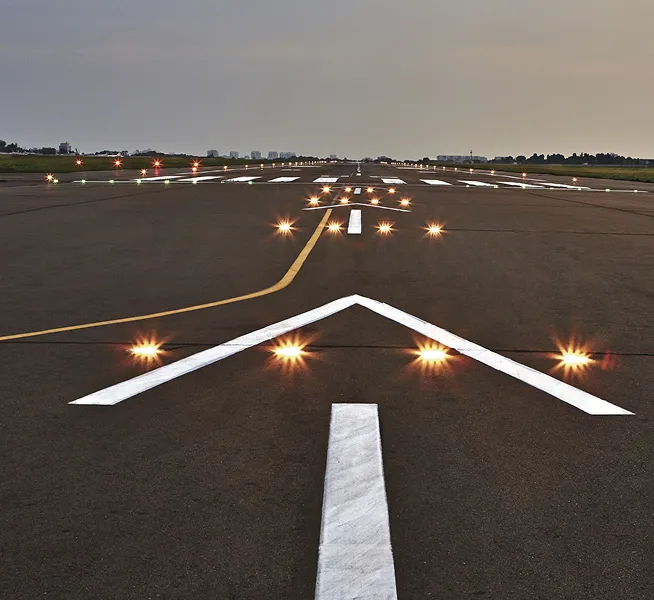
Airfield ground lighting (AGL) is essential to ensure the safety of airport operations. AERTEC’s aeronautical and electrical engineers who specialise in AGL are familiar with the applicable international standards and offer advice and engineering services for all kinds of lighting (non-precision approach runways and CAT I, II or III precision approach runways).
Their experience not only covers traditional systems like standard tungsten lamps, but also advanced systems using LED and solar-powered solutions, and even state-of-the-art systems in this area like A-SMGCS or alternative AGL power supply solutions.
Preliminary, basic and construction project designs for airfields
AERTEC has well-trained human capital comprised of aeronautical, civil, electrical and telecommunications engineers with the technical know-how and experience needed to design airfields.
Project planning
System specification (attributes, operation and performance)
Procurement package (documents)
Procurement process (valuation, contracts, etc.)
Deployment (insurance system)
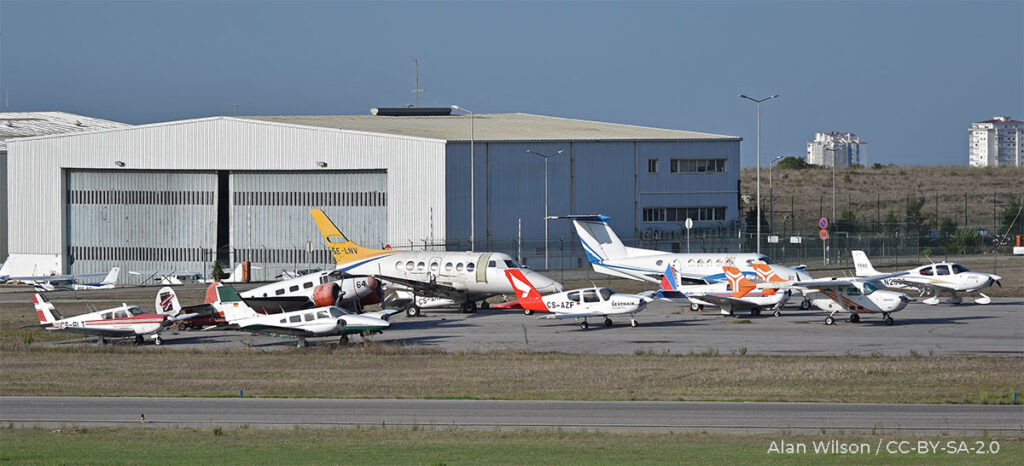
Design of aircraft parking aprons and their associated systems
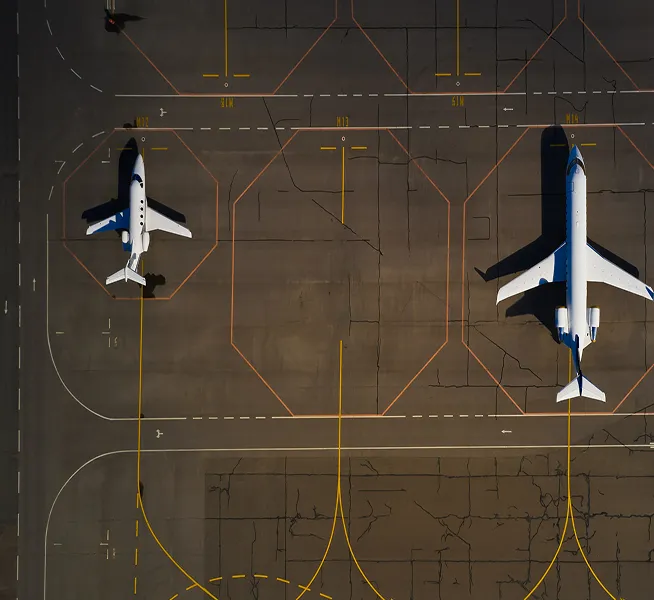
Specialists in designing aircraft parking aprons and their associated systems. The design of the following elements is linked to these infrastructures: paving, horizontal signage, ground lighting and special systems, such as visual docking guidance systems (VDGS), pre-conditioned air (PCA) units and ground power units (GPU), and the design of apron lighting design and service areas, roadways, etc.
Design of instrumental aids: radio equipment
We study the effect on navigation of obstacles to radio aids, their ideal location, and assess the operational constraints resulting from the critical and sensitive areas defined. We conduct new equipment supply studies and draw up strategies: type of equipment, location and installation.
Heliport and helipad design and paperwork
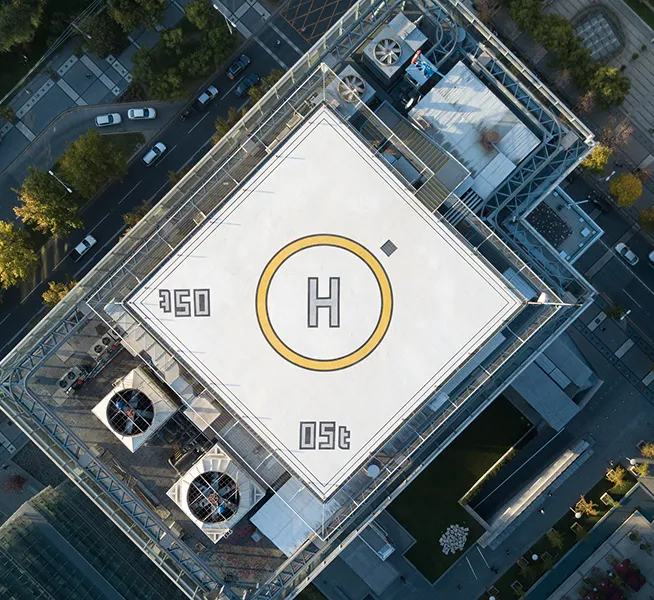
We are experts in designing and planning heliports and helipads. AERTEC designs integrated solutions for private and public clients and related activities, such as: medical emergencies, firefighting, maintenance, passenger transport, etc.
Airport infrastructures
We design airport infrastructures and facilities that, although located outside the airport grounds, are closely linked to it. AERTEC's services cover both internal and external infrastructures linked to the airport sector.
Control towers
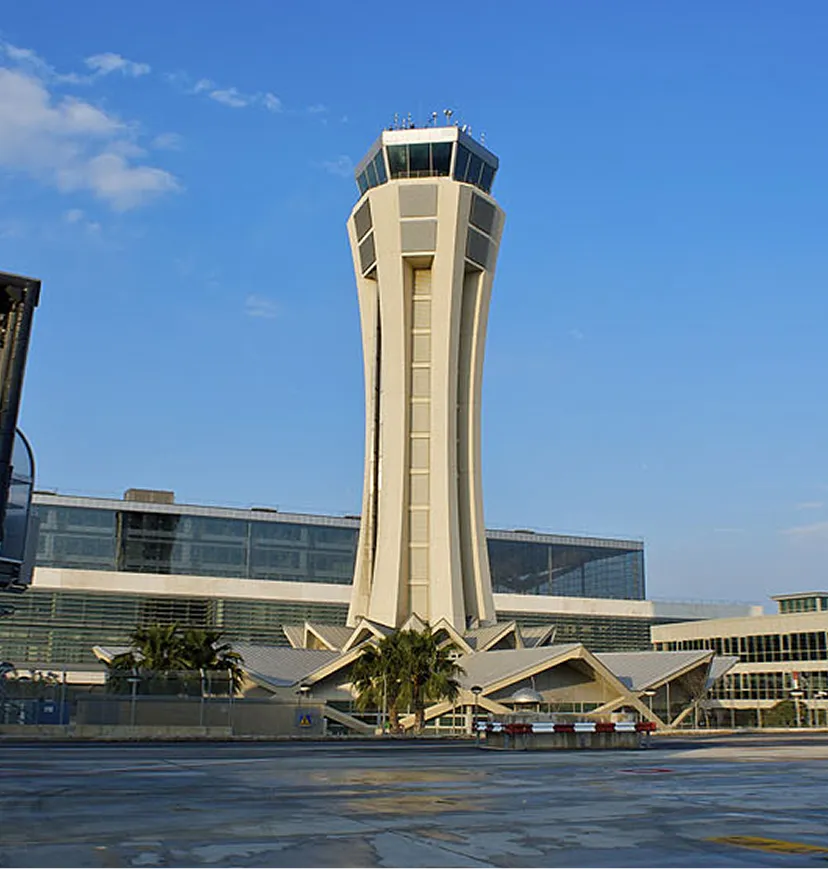
Our capabilities and experience enable us to act as the lead consultant and engineer in the complete design of a control tower. From initial planning, establishing its optimal location, height, equipment requirements and adaptation to international standards, to detailed design including architectural concept and basic design.
Terminal areas
Preliminary, basic and construction project design
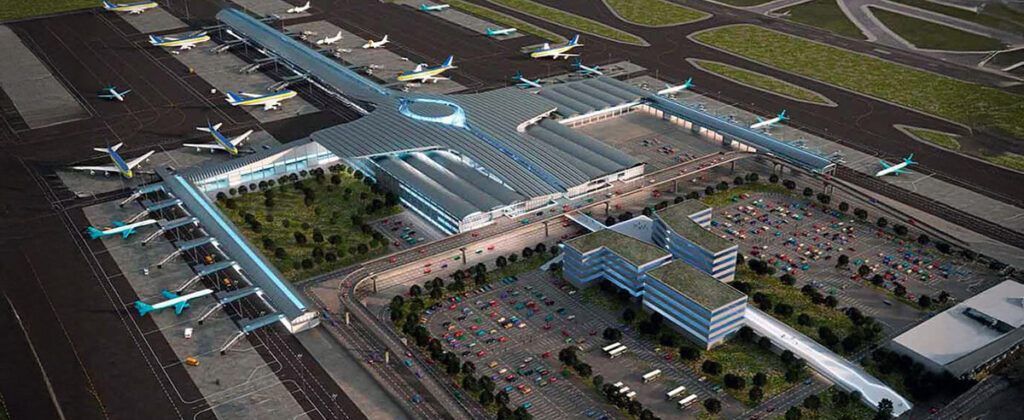
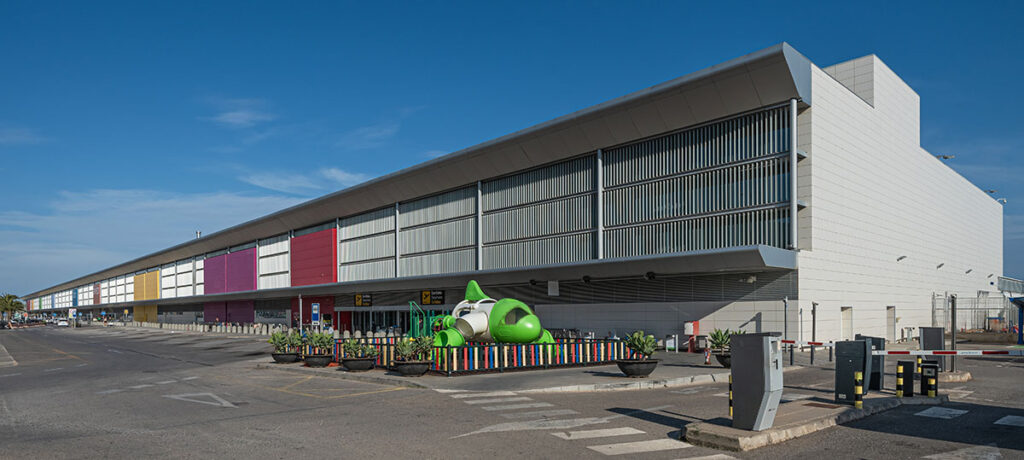
Passenger terminal design, including shopping areas and spaces
Cargo terminal design
VIP terminal design: general and corporate aviation
Design of access routes, urban infrastructure and car parks (intermodality)
Ancillary buildings
Preliminary, basic and construction project design
Electricity grid and substation design
Emission centre design
Design of rescue and firefighting service buildings
Hangar and MRO design
Fuel plant and distribution system design
Design of multi-service buildings: security, airlines, etc.
Airport architecture
At an airport, everything must be designed according to aeronautical criteria, from overall system viability to design and execution. This requires engineers and architects who can integrate processes, flows and volumes, creating efficient and functional spaces. Architecture and engineering coexist in an essential balance.
Designing airports poses challenges such as handling large scales, designing adaptable terminals, complying with standards and ensuring efficient maintenance.
Designing airport buildings also presents major challenges:
Dealing with large scales, which are always difficult to resolve from a compositional standpoint
Designing buildings that can be easily extended, because the number of passengers who pass through the terminals will increase in the future
Complying with current regulations
Efficiency and ease of maintenance, since, due to their size, consumption and costs are greatly increased
Simulation for airport planning
Modelling and analysis of all airport processes to predict the most efficient solutions in each past, present or future situation.
When a system reaches a certain level of complexity (as is the case for airports), analytical calculations may not be effective, sufficient or even possible. Simulations enable a detailed analysis, with numerous interdependencies, processes and input parameters.
Simulations allow us to create models that factor in the dynamic effects of information and interrelationships between all airport operations. Realistic and detailed models of airport ground distribution can be created to support airport design or air traffic simulations. It is possible to recreate any past, present or future situation, where the result of any interaction can be accurately analysed.
For planning:
Better understanding of processes
More reliable planning
Lower risk in the decision-making process
For design:
Optimisation of infrastructure capacity
Early detection of design flaws
Identification of impediments
For operations:
Increase in operational efficiency
Tests prior to the implementation of procedures
Avoids using the trial and error method in the field
Optimised resource allocation
Airspace – flight procedures (SID, STAR, RNAV-based etc.). Identification and evaluation of possible improvements in airspace capacity.
Aerodrome – evaluation of the need for and location of new structures such as RETs, holding bays, connected taxiways, etc. with the aim of improving capacity and eliminating problem areas.
Apron – evaluation of different configurations and redistribution of parking spaces, ground procedures, taxiing sequences, parking restrictions, etc. The software produces a Gantt chart that includes the use of parking spaces, making it possible to calculate critical parameters such as average delays, push-back times, hourly capacity, etc.
Fuel consumed on the ground and emissions from aircraft and APU engines, which can be accurately modelled with the aim of reducing emission levels.