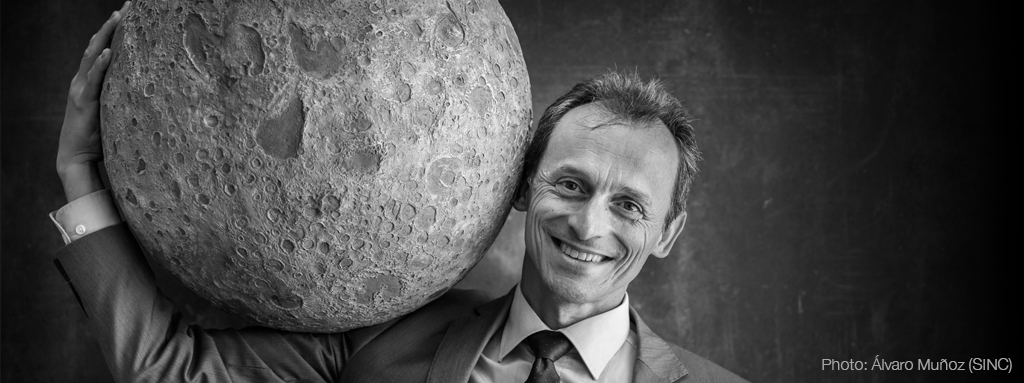
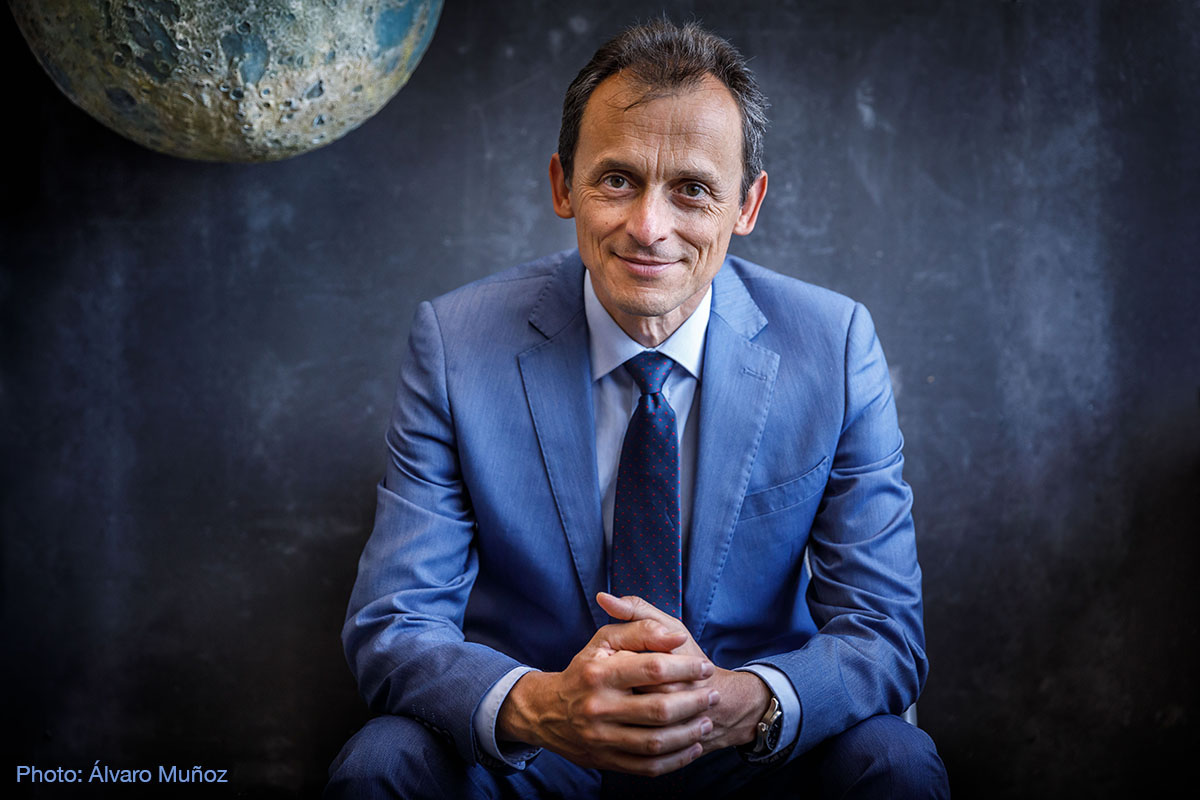
Interview with Pedro Duque, Astronaut, Aeronautical Engineer and Minister of Science, Innovation and Universities of the Spanish Government. Member of the Royal Academy of Engineering of Spain. Prince of Asturias Award for International Cooperation.
"From the International Space Station you realise how fragile what we call our ship, planet Earth, is."

How did you experience the night of 20 July 1969?
I was 6 years old and at that time we were spending a few summer days in Cestona, Guipúzcoa. I remember watching it on a black and white television, I don't know if it was live or recorded. I think that all the children who watched Jesús Hermida's broadcast that day wanted to be astronauts, although in the Spain of that time it seemed impossible that a Spaniard could be an astronaut.
After 50 years since man first landed on the moon, NASA has announced its intention to return in 2024. Why do you think it has taken so long to set a date for a space mission like this? How do you imagine a moon landing 55 years after Neil Armstrong's achievement?
It has taken so long because the necessary means to return to the Moon have not been put in place. It took a unique push from the public authorities: the ambitious Apollo programme promoted by President Kennedy. Years later, Nixon cut NASA's budget by a fifth and it never recovered.
Now, the US wants to resume the project to return to the moon. A few weeks ago I met with NASA officials and they are very excited about the Artemis mission, with which they want to set foot on the Moon again in 2024, which is a preliminary step to embark on the first mission to Mars. A base on the Moon would be feasible and would make it possible to develop resources that could be useful in the future exploration of the rest of the planets and bodies in the Solar System. Also, setting such a goal would lead to the development of transportation, working methods, metallurgy, etc.
Europe has to decide whether it wants to be a protagonist of this new milestone for humanity. It would be less risky today than it was 50 years ago, but it would still be risky.
 How has Spain's and Europe's role in the space race evolved in recent years? Revitalising the joint EU-ESA Space Council is an important step towards greater leadership...
Europe has never had the level of investment of the US, and even now we invest ten times less than the US in manned programmes. It was important to revitalise the Space Council, which last met in 2011, to strengthen Europe's position. Spain has promoted this meeting, which will be continued in 2020, under the German EU presidency. As President of the Ministerial Commission of the European Space Agency, I am advocating for investment in going to the Moon. The meeting in Seville this November, where ESA's new multi-annual budget will be approved, will be decisive.
In the case of Spain, we are working for an overall increase in budgets for science, innovation and universities. If this increase happens, we will raise our participation in ESA, at least to the European average.
All over the world, people are commemorating this important milestone in human history. You probably also remember your trips to the International Space Station most vividly. How does it feel to see the Earth from 400 km away?
It is an important commemoration that we have to take advantage of, because it is true that it is being given a lot of importance everywhere. Regarding my trips to the International Space Station, being in space gives you a very pleasant feeling of peace, although you have to be aware of many things, so you don't have much time to reflect. You also realise how fragile what we call our ship, planet Earth, is; how thin the atmosphere is. That's why we must take action against the climate emergency we are experiencing. At the moment, we only have this ship to live on.
Does an astronaut live with his feet on Earth and his head on the Moon?
The feet and the head must always be in the same place. Right now, as Minister of Science, Innovation and Universities, I am working to ensure that Europe, and therefore Spain, plays a leading role in the next manned missions. We have it within our reach for a European person to be on the first mission to Mars. Why not a Spaniard?