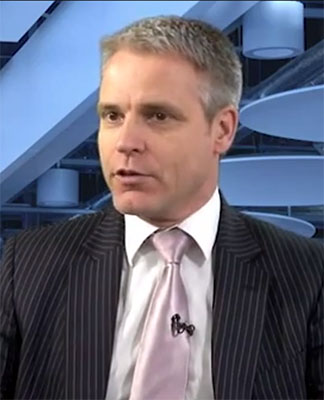
In this edition of our Newsletter, we are pleased to interview Paul Willis, Managing Director of Airports at ARCADIS. Throughout the interview he shares some key insights based on his expert knowledge of the sector, including his views on how European consulting and engineering firms should approach the market.

The forecasts and trends for the future of the sector are extremely positive. However, how does aviation in Europe, considered a saturated market, compare with other emerging markets such as Asia, the Middle East and Latin America?
In terms of trends, I would say that the key in emerging markets is the creation of new infrastructure, whereas in Europe the trend is more towards upgrading existing infrastructure. For this reason, the opportunities are different. In Europe, the key is to maximise the capacity of existing airports, so companies like AERTEC Solutions and Arcadis have a slightly different proposition for each market. In emerging markets, we design and build new runways, while in Europe, we focus on operational improvements.
Of course, another problem in Europe is the uncertainty surrounding the euro today. In terms of investment opportunities, market conditions are slightly different and not as optimistic as in emerging markets.
 As an expert advisor to the aviation industry, what is the difference between infrastructure investment in mature markets (such as Europe and the United States) and new airport investment in the Asia-Pacific or Middle East regions?
The key in Europe is the sale of state-owned infrastructure. Investors are looking to profit from existing infrastructure, whereas in emerging markets, the key is the creation of new infrastructure and return on investment, whether in runways, terminals or any other type of infrastructure. The focus in Europe will be on increasing aeronautical and non-aeronautical revenues from existing infrastructure. For example, will I maximise the retail offer if I change the retail or food and beverage mix to encourage passenger spend? Can I find a smart way to reduce operating costs at the airport? Can I use existing technology or the design I choose to adopt to reduce the consumer costs of operating the airfield or terminal infrastructure? However, in emerging markets, operating costs are not currently an issue, as staff and labour costs are lower, so they are not such a major driver. The objective is to ensure that the infrastructure is designed to international standards, is of the right quality and is built on time to provide a return on investment.
What factors and challenges are taken into account when making decisions on airport infrastructure investments?
For me, the key is to make the investment profitable and to make sure that the expected demand is adequate for the infrastructure created. If you think about the Middle East five or six years ago, when money was not an issue, they were building infrastructure because they wanted to be the biggest. They wanted to have the tallest control tower and the biggest terminal; those were their key objectives. Now, however, they focus on market needs and demand. They still want to be the best, but now they are making sure that the facilities match the demand, as well as making a reasonable return on the investment made.
The oil price is also having a strong impact on the region. You don't get the same revenues, so there is now much more caution in approaching a justified business.
What is the role of European engineering companies, and do you think they should concentrate on specialisation or try to offer the full package?
I think focusing on specialisation is important. The market has changed quite a lot over the years. Five or six years ago, generic companies were accumulating and managing large work packages. Now I think the key is more about collaboration. That's why we believe that working with a company like AERTEC Solutions can be beneficial for Arcadis. Customers want to see specialisation. They still want to see large work packages coming together, but they recognise the need for proper collaboration and specialisation within the team. I think we need to differentiate ourselves from others in this respect. We need to be experts in what we are good at rather than trying to be all-encompassing.
Collaboration is the basis of our approach. A company such as AERTEC Solutions could cover airfields, while another company, such as Grimshaw, would take care of the architecture and we could take care of other aspects. We like to take the lead, but we recognise and mention all our partners.
Public ownership of airports versus private investors: is there an ideal management model to improve the competitiveness and efficiency of airport policies?
I think that in the case of airports, since they are national infrastructures, concession agreements are probably the best model. In this way, not all airport assets are privatised or sold. A given asset is released for a limited period of time on payment of an initial fee, followed by an annual concession fee. Subsequently, after an appropriate period of time, such as 30 or 40 years, such infrastructure is either returned to the state or, more likely, offered again for a subsequent concession.
Green programmes are becoming an increasingly important part of airport strategy and development (reduction of CO2 emissions, use of biodiesel, electric transport, etc.). What measures are you currently implementing to make airports more sustainable?
Rather than separate green programmes, we try to integrate them into our designs and then demonstrate how they benefit our airport infrastructures. For example, if I design the airport or terminal building in a way that consumes less water, I obviously apply the green programme, but it ultimately benefits me because it reinforces the benefits to my business. We look at life-cycle costs and think about the overall benefits. Let's take an example of something your company does: track lighting. I might be interested in investing in LED design, which would be a higher upfront capital expenditure, but over the full lifecycle, because of this infrastructure, I would get a significant return, as power consumption costs over time would be greatly reduced. By taking these aspects into account, we implement the green programmes.
Of course, the other key aspect is the fact that aircraft are becoming quieter and quieter. We promote operational efficiency at airports in order to reduce CO2 emissions. We make sure that aircraft roll and back up for less time. These are the aspects we try to integrate into our models. I think the failure of airports in the past is that they have not had a specific green programme linked to the overall business or operations. The two elements are closely linked. Green programmes must promote business efficiency. If not, the benefits to the overall airport business must be clearly demonstrated. In my view, it is important to look at the business holistically, as you will not be able to balance it if you only focus on trying to address environmental issues.
According to the International Air Transport Association's (IATA) latest 20-year passenger traffic forecast report, 8 out of the 10 fastest growing markets in percentage terms are located in Africa. The Central African Republic, Madagascar, Tanzania and Burundi will be the fastest growing markets in the region. How do you envision these airports on the African continent in the future?
Africa is undergoing tremendous development, so we are now looking for the right opportunities in the region. I think the biggest challenge for Africa is the fact that before it can invest in the infrastructure it needs to grow, its institutions and governments need to be prepared to manage the airports properly. This is necessary from a financial point of view, so that investment in such infrastructure is made correctly and transparently. In addition, it is necessary to ensure that, from an economic regulatory and safety point of view, they have the necessary structures and organisation in place to manage the infrastructure. The danger in Africa is that there will be an explosion in infrastructure development that will not be properly managed, so that infrastructure will not be built in growth areas or will not be properly managed. Everything has to be properly adapted. That is where I think they need help.
In your opinion, what is the best airport in the world?
It depends very much on the region, the airlines and the traffic the airport is trying to attract. I think Singapore airport is first-class in terms of shopping experiences, processes, air and ground access, etc.
I also think Terminal 2 at Heathrow (London) is fantastic and offers a fabulous passenger experience. It is a first class terminal.
It is very difficult to say which is the best airport in the world, but Hong Kong is another great example. In terms of connections, it is fantastic. Munich is another fabulous example of airport performance in terms of efficiency and design. Oslo is also a very good example in terms of connections. Although it is a long way away, the train works really well. It offers a good passenger experience. The new international pier at Zurich airport is another good example of transfer operations.
I don't think there is a "perfect airport for everything", but there are plenty of contenders.