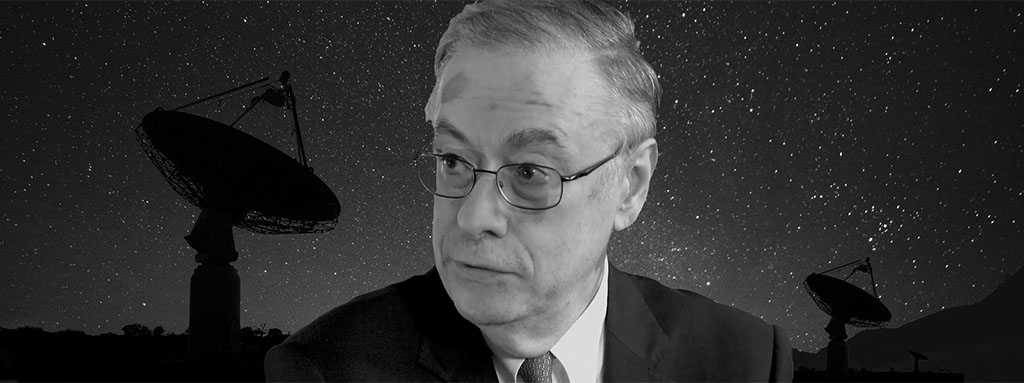
Interview with Anthony Carro, NASA Representative in Spain.
"Scientific research, both in the Solar System and in intergalactic space, is advancing at an unstoppable pace.

What is the MDSCC and what role does it play in space exploration?
The MDSCC (Madrid Deep Space Communications Complex), located in Robledo de Chavela, is part of the so-called Deep Space Network (DSN). This network, consisting of three equidistant stations located in Madrid, Goldstone (California) and Canberra (Australia), allows permanent contact with space probes.
NASA has three major communications networks: one for near-Earth orbital flights, one for intermediate distances (transmitting signals via a set of satellites in geostationary orbit) and one for remote missions, including missions such as Voyager (1 and 2) that are outside the Solar System.
The DSN covers numerous missions of almost all space agencies. Its three stations, after receiving data from the probes, transmit them to JPL (Jet Propulsion Laboratory) for further distribution to the responsible centres and, in general, to anyone interested in space science.
What are their functions from a technical point of view?
All three DSN stations are similarly equipped. The MDSCC has six high-capacity and high-sensitivity antennas at its disposal (one 70-metre, four 34-metre, and one 26-metre), and two more 34-metre antennas are currently under construction. To become aware of the large dimensions of these antennas, suffice it to say that the 70-metre antenna is larger than the bullring of the Las Ventas bullfighting ring. The 26-metre antenna is a historic antenna, which was moved from the Fresnedillas de la Oliva station to the Robledo de Chavela station, and which transmitted the first communications from the moon on the Apollo 11 flight.
Why is this centre located in Robledo de Chavela, in the centre of Spain?
The three stations have to be separated by about 120 degrees in longitude to maintain constant communication with the probes, regardless of the Earth's daily rotational motion. After choosing the Goldstone and Canberra stations, a third station was needed in an area close to Spain. In addition, a location close to a metropolis with good air links to the USA was desirable, as much of the equipment came from there. It was decided that three separate stations would be needed in Spain to avoid possible electromagnetic interference in three nearby valleys. After a meticulous search, it was determined that the three stations in Spain would be located in Robledo de Chavela, Fresnedillas de la Oliva and Cebreros.
This month marks the fiftieth anniversary of man's landing on the moon. What role did NASA's facilities in Spain play?
Collaboration with Spain, through the Instituto Nacional de Técnica Aeroespacial (INTA), was crucial for the Apollo programme. This cooperation continues to be fruitful today, and research on Mars is particularly noteworthy. The Centre for Astrobiology is developing instruments for the Mars 2020 mission.
There were four stations in Spain: Maspalomas, Robledo, Fresnedillas and Cebreros. The Maspalomas station was the first and played a fundamental role in the first manned flights of the Mercury, Gemini and Apollo programmes. The Fresnedillas station, dedicated to the Apollo programme, with the support of the Robledo station, received the first Apollo 11 signal from the Moon, through the historic 26-metre antenna mentioned above. In commemoration of Spain's important role in the Apollo programme, a moon rock from Apollo XV can be seen in the MDSCC Training and Visitor Centre.
Which of the missions you currently carry out in this centre would you highlight and why?
The MDSCC has participated in almost all of NASA's missions to outer space and, because of its large capacity, in many of the missions of other agencies. It has visited all the planets in the Solar System and many of the asteroids and comets.
It is impossible to single out some missions over others, because they are all important for the advancement of our scientific knowledge of the Solar System and research into fundamental questions such as the existence of life in the Universe. One example is the Kepler mission, which searched for planets in other galaxies and, in particular, in the so-called habitable zones, with conditions similar to our own. But we should also mention some missions well known from recent news, such as the Mars missions and in particular their rovers, the Cassini-Huygens mission which studied the planet Saturn and its satellites, New Horizons which studied Pluto and is studying the Kuiper Belt, Voyager 1 and 2 which are still searching outside the Solar System after more than 40 years of flight, Parker Solar Probe which is investigating the Sun, Osirix-Rex which will bring back samples of the asteroid Bennu, etc.
What do you see as the next great space adventure - back to the Moon or to Mars?
Scientific research, both in the Solar System and in intergalactic space, is progressing unstoppably. In terms of human spaceflight, research continues on the International Space Station. Recently, the Artemis programme has been announced, where a man and a woman will return to the Moon in 2024, with a view to having a permanent station on our satellite in 2028. The Artemis programme will test new technologies, capabilities and commercial approaches on the Moon with the ultimate goal of a manned mission to the planet Mars. Currently, the Mars Reconnaissance Orbiter, Curiosity and Insight missions continue to investigate the Red Planet and pave the way for the Artemis programme's manned flights to Mars.
Space exploration is now much more open than 50 years ago to new actors, especially from the private sector. Do you see this change as positive?
Space exploration has always been open to all kinds of collaborations, from government agencies, researchers and industry. These links are growing stronger every day. NASA will increasingly partner with industry and its international partners in these exciting missions of scientific research and manned exploration to the Moon and Mars. Spain will undoubtedly continue to be an integral part of all these developments to advance research on other planets.