AERTEC is spearheading the development of an innovative collision prediction system for UAS / RPAS flights of less than 25 kg, at low altitude (below 120 metres), out of line of sight and in rural environments.
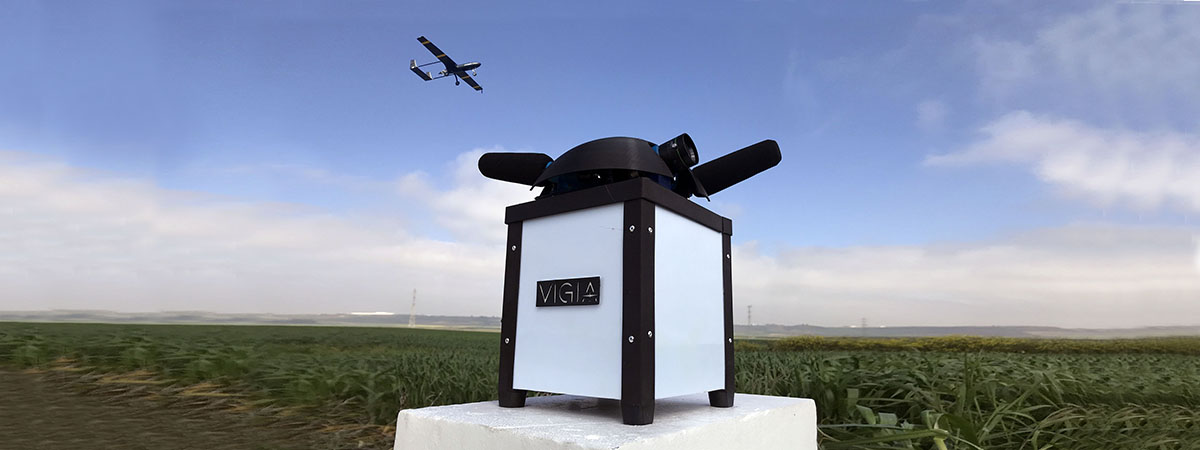
This is a new technological development that allows pilots, through intelligent ground nodes, to apply pre-determined manoeuvres for avoid collisions with other aircraft and obstaclesand mitigate the risks of this type of BVLOS (Beyond Visual Line of Sight), i.e. beyond the visual range of the pilot.
The system has been developed taking into account the considerations of the Spanish civil aviation authorities and the current regulatory framework, in order to facilitate the authorisation of flight permits in this context.
This system is part of the VIGÍA project, co-financed by the Centre for the Development of Industrial Technology (CDTI) and the European Union's FEDER funds as an INNTERCONECTA project, led by AERTEC and in which the Sevillian engineering company Emergya also participates. AERTEC has been responsible for the design and development of the system's ground detection nodes, with the collaboration of FADA_CATEC, and the avoidance system, the integration of hardware and software, and the field testing and validation of the system.
Among the new features of this system is the use of mobile communications over the 4G networkThis guarantees contact with the aircraft in the event that radio communication (UHF) is no longer effective. Both the UAS / RPAS and the ground nodes and the control station are interconnected through a platform, which is in the cloud, and which allows a large amount of useful information to be gathered for decision making, using disruptive technologies such as artificial intelligence or the machine learning.
Since the project began in 2018, it has been necessary to several flight test campaigns to test the capabilities of this systemand for which AERTEC's TARSIS 25 unmanned aerial platform has been used.
According to Juan José Calvente, head of the UAS / RPAS department at AERTEC, "this new technological development enhances the capabilities already offered by our TARSIS unmanned systems.So growing in performance is also growing in solutions for the market.
Once the final phase of the project is completed, the results will be presented to the Spanish civil aviation authorities, who have been aware of this proposal from the beginning of the project, in order to start implementing the system, since by guaranteeing this specific type of low altitude and out-of-line-of-sight operations would facilitate the authorisation of flight permissions in this context.. In addition, the consortium has already identified possible use cases and applications for this technological development, for example in the monitoring and inspection of linear infrastructures.
#uas