From "Back to the Future" to "The Fifth Element", urban air mobility has been a recurring feature in popular culture's image of what the future will look like. Now, technology allows us to get a little closer on this front. And it's not just because we like to take on the technical challenge of making fiction come true, but also because the light and individualised air travel can play a key role in the sustainable and intelligent transformation of our transport systems.
Vertiports represent an opportunity to develop interconnected services by integrating available energy and transport in urban areas in a sustainable and more rational way.
The need is real, but bringing urban mobility to the air will require more than just the technology to fly vehicles. It will involve a rethink of our current transport networks, along with the integration of even more profound changes to our urban environments in general.
To begin with, these aerial vehicles will have to take off and land at specially designated take-off and landing sites for safety, logistics and availability reasons. Over the last two years, many leading aeronautical companies and organisations have been working on researching and planning for the future of Urban Air Mobility (UAM), also known as Advanced Air Mobility (AAM), as a growth opportunity for cities around the world.
Air mobility in urban and peri-urban areas aims to improve our daily lives by reducing the time and cost of moving people and transporting goods in and out of cities. As a collateral effect, and not least because of this, it will bring about a breakthrough in the sustainability of urban areas.
The urban/advanced air mobility market is expected to experience a CAGR of 11.33% over the next ten years, with a business outlook in excess of USD 15 billion by the end of that period.
But to get to that point, UAM/AAM itself needs a place to land.
What is a vertiport?
It is called vertiports at platforms used by aerial vehicles, especially electric vehicles, for vertical take-off and landing. These infrastructures are conceived not only as stations, but also as part of larger multi-purpose renewable energy, data and utilities centres where the concepts of "renewable energy", "data", and "energy efficiency", "energy efficiency", "energy efficiency" and "energy efficiency" are all part of the same concept. mobility e intermodality are almost always part of the equation.
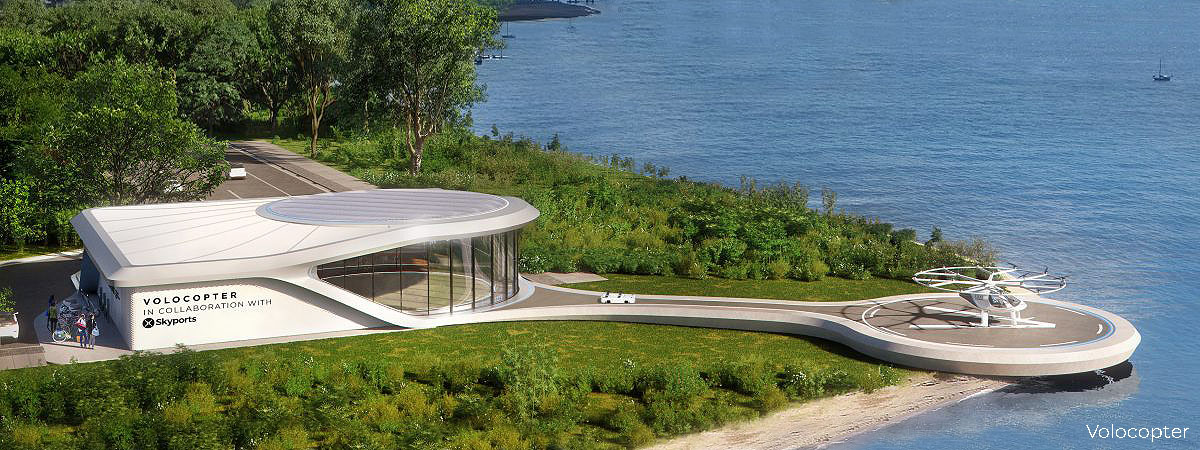
These consist of a operational platform for aircraft manoeuvres and a connected building for the associated technical equipment (such as charging infrastructure or passenger assistance). There are various types of landing stages ranging from the old heliports, which have been adapted with electricity charging devices, to specific purpose-built landing stages.
Depending on the passenger demand to be served, the configurations of the vertiports may vary. Currently, the three most widespread configurations are as follows: for a single vehicle and a single reception area at the side, for a single vehicle with three reception areas in the centre (allowing for higher capacity), for two vehicles and four reception areas (again, for higher capacity).
The space requirements and, above all, the general concept of the moving towards more efficient and sustainable mobilityAs a result, a good number of land ports are designed to complement existing transport hubs or nodes. In these cases, the land ports can be integrated without adding significant additional stress to the preceding infrastructure. They can be integrated with rail or bus stations or airports to complement or complete the transport chain or be added to schools/universities, health facilities and businesses, etc., without the need to build additional land-based infrastructure (e.g. without rail tracks).
However, completely new centres are also designed in areas that are difficult to reach by other more traditional transport infrastructures for conflicting reasons: urban saturation or isolation.
What are the inherent benefits of developing vertiports?
The potential benefits of land ports vary according to the type of country/city and the status of its transport networks:
- In developing countries o in cities that have less established public transport networks and where new urban infrastructure is being developed, there is an opportunity to develop gateways that connect remote neighbourhoods and provide transport links to areas underserved by rail and road routes.
Remote, high-quality urban areas with limited mass transport needs could also be connected by air without the need for costly mass transport infrastructure such as rail corridors or road improvements, and to avoid any congested or indirect road transport alternatives.
The development of landfills in this scenario could be easier than in developed countries, as there would be fewer constraints imposed by existing buildings and fewer competing transport options.
- In more developed countriesThe integration of land ports into the urban environment is seen as an additional mode option to increase the catchment area of mass transport hubs, as well as offering a premium alternative for businesses or users who need to travel from one area of a city to another quickly or for airport links (especially in cities without rapid transport connections between the city and the airport).
Supported by the right technologies and data analytics, they can deliver demand-responsive services and improve the customer experience.
The vertiports represent a opportunity to develop interconnected services integrating available energy and transport in urban areas in a sustainable and more rational way. They should therefore be designed in such a way that they can be implemented within existing building structures. In the future, they could be directly integrated into new essential service facilities to be built (schools/universities, health centres, companies, etc.).
In the United States, for example, such landing sites and structures will be linked to real estate within a county, within a city, within a state, each of which may have a completely different legal orientation in terms of infrastructure integration and compliance.
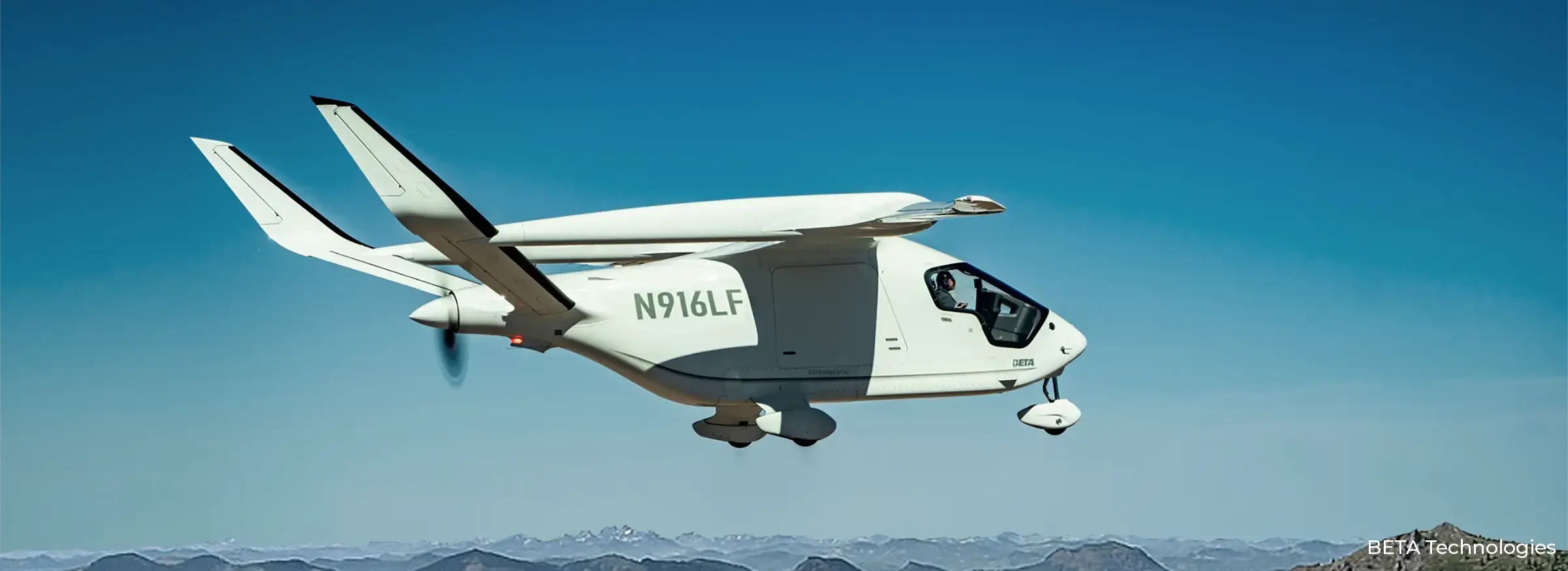
There are dozens of VTOLs (vertical take-off and landing aircraft) in various stages of development, and their manufacturers are hoping to grab a share of the nascent but potentially lucrative flying taxi market. Hyundai forecasts that the aerial mobility market will be worth nearly $1.5 trillion over the next 20 years.
Challenges in the construction of seaports
Prior to the construction of a landfill port, its operators shall ensure that they meet all the requirements for a secure, robust and scalable operation. In addition, resolving issues related to the certification (linked to the crews), as well as the surveillance, air traffic control and securitywill be essential to implement the UAM.
For urban air mobility (UAM) to take off, VTOLs have to prove their safety and reliability, air traffic management has to adapt to accommodate them, the public will have to accept this new mode of transport, and it will have to be affordable. And there is another major hurdle that we have already discussed: an adequate infrastructure has to be created for landing, recharging and take-off with passengers.
Where are there and will there be vertiports?
In October 2020, the world's first prototype air taxi landing stage was unveiled at the Float at Marina Bay in Singapore during the Intelligent Transport Systems World Congress. The "VoloPort" is the result of a partnership between air taxi manufacturer Volocopter and UK-based developer Skyports, owner and operator of vertiports.
Skyports is working with a dozen other megacities around the world, aiming to be the first to deploy the commercial air taxi, especially in Los Angeles, where Uber has publicly stated that it intends to be operating air taxis by 2023.
The strategy for the rollout of landports, according to Skyports' CEO, includes linking the dots between urban business centres and major air transport hubs, noting that "landports will be a really important part of the overall network, as there is clearly a lot of traffic congestion between airports and city centres."
#uam