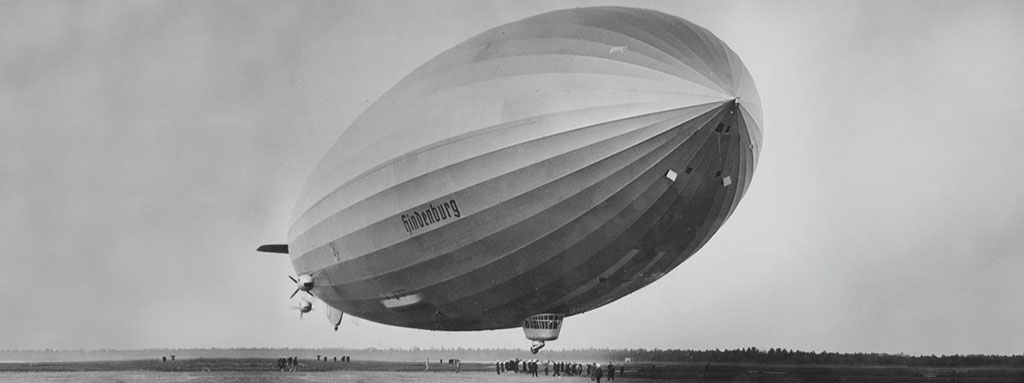
6 May 1937, German airship LZ 129 Hindenburg is approaching Naval Air Station Lakehurst, New Jersey (USA) from Frankfurt (Germany), after a three-day flight over the Atlantic.
In the early 20th century, airships dominated passenger air transport. Now they are making a comeback with a new impetus from today's technology.
On the ground, there was a lot of expectation awaiting their landing, as it was the first transatlantic passenger flight to land in the United States that year. It began to descend before the eyes of a large number of people, including journalists, photographers, cameramen, and radio broadcasters, when suddenly it began to burn, being completely engulfed by flames in less than 40 secondsaccording to the accounts of the people who were there. Later studies suggest that the time it took to catch fire may have been even shorter, the main reason being that it was filled with hydrogen, a highly flammable and explosive gas.
The Hindenburg, a symbol and pride of the German Nazi regime, was the largest aircraft ever built at that time (245 metres long and 41 metres in diameter) and carried 97 people on that flight, including the crew.
Thirty-five of the 97 people died. More people were saved than would have been expected, given the voracity of the flames. The reason is that most of the passengers were able to jump out moments before the airship hit the ground and escape before the structure fell on them.
Why did the fire start? There are many theories on this subject, but one of the most popular is that the fire was caused by static electricity. Moments before the accident there had been a thunderstorm, so Captain Max Pruss decided to divert the airship before landing to wait for the storm to end, passing over Manhattan Island, to the astonished gaze of the citizens. When the decision was made to land, the weather had cleared, but the air was electrically charged. Witnesses to the disaster reported observing a flash in the airship's sternjust before the fire started, but this moment was not recorded in the existing videos and photographs. This flash may have been what is known as the San Telmo fire, an igneous atmospheric phenomenon caused by the ionisation of the air, for example in an electrical storm such as the one that occurred that day.
It was an accident with all the necessary ingredients for great significance: spectacular, symbolic and highly publicised in the media. It is not surprising, therefore, that the German government ordered stop the production of commercial airshipsThe first of these ships was the first to be built, with all those who were developing them following his example. This meant the end of this means of passenger transport, which at that time was at its peak.
Today, 81 years later, there is a desire to revive this form of travel, focusing on the luxury tourist sector. There are already companies that have developed models that are being tested and intend to take to the skies soon with passengers on board. Will we manage to erase the mark of the Hindenburg disaster?