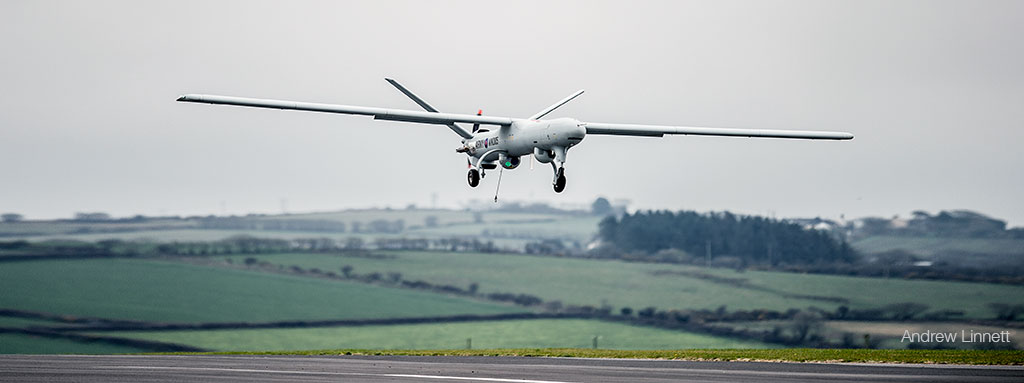
When the Austrian army used explosive-filled balloons against the city of Venice in 1849, they could not have imagined that they were ushering in the era of what would later be called "unmanned aerial platforms UAVs", today also known as RPAS (remotely piloted aircraft systems).
Under the popular name of "drones", their active use in military conflicts has been the norm to date, as the option of memorising routes and targets without the need for radio control and being able to have a complete weapon system without putting a pilot's life at risk, has given them a versatility that the big companies have been able to take advantage of for the development of R&D&I projects in the military industryBut the excellent option of having an autonomous navigation system that allows efficient flight operations day and night, with fully automatic take-off and landing, and that can carry payloads of up to 150 kg without apparent difficulty, has awakened the imagination of technicians and business acumen to give drones a new dimension in the world of aeronautics. civilian application which is being imposed day by day and at a high cruising speed, driven by the important business that is emerging in the face of the demand created by a citizen avid for modernity.
The key is the future application of this wonderful technology (RPAS) in commercial and passenger aviation.
Many authors agree that after the fall of the Berlin Wall in 1989, which ended the so-called Cold War between the USA and the former USSR, new horizons opened up for the industry with the civilian applications of technologies developed by the defence industry. A social benefit, but also, obviously, an economic and business benefit that had an impact on the aeronautical sector.
RPAS technology followed the same path of development but, between the Predator, Altea, Dyana, X-Prop, and the traditional orthocopters of diverse applications that are beginning to proliferate for a multitude of uses, there is not only the difference of a sophisticated technological development with severe certifications and highly qualified personnel, but also a degree of social acceptance which, in all likelihood, will condition the regulations to be promulgated by the Spanish Aviation Safety Agency (AESA).
For example, it seems clear that there must be a difference between the quality requirements of the components of an RPAS for scientific use, such as NASA's Ikhana vehicle, which acts as a test bench for developing capabilities and technologies to improve the usefulness of unmanned aircraft systems, or Laval University's (Canada) Argo, capable of operating in the extreme conditions of the Arctic Ocean, diving to almost 2,000 metres to gather information on marine organisms, and the one that Sydney-based delivery company Fastway Courier needs for its airborne delivery service over New Zealand's Auckland. Does it mean risk? Probably not, but it does affect the quality of the components and therefore the price, with the resulting increased social demand and obvious business opportunity.
Recently a small UAV flew over the US Capitol; another one landed in front of German Prime Minister Angela Merkel while she was giving a speech in a public square, and on the golden beaches of my beloved Huelva, some parents entertain their children with unmanned flights that have "made in China" components. What interpretation can we also make of these facts? For me there are two very simple ones to understand, the issue of safety and the risk of accidents. The first is that they can easily provoke attacks, and the second is the risk of collateral damage.
It seems that these drawbacks can be solved by specific legislation American and European jurisprudence, including Spanish jurisprudence, are already working on this, and will soon set regulations, given the irregular proliferation of aircraft that are already being sold on the markets, the diplomas that are issued to fly them and the illegal use that citizens make of them.
But these issues are not the most important part of this exciting adventure to which the great development of aeronautical technology and the huge business opportunity in the world of RPAS. In my view, the key lies in the future application of this marvellous technology in commercial and passenger aviation, something that, today, would be such a huge risk that no government would be willing to take, nor any company willing to make the huge investment that the challenge deserves. Time to time, therefore, where we must bet now is in research and trainingThis is the responsibility of companies and universities in a coordinated way, joining forces and hopes.
I think that the master's degree is a logical way for R&D&I to develop in this new and promising sector, as it will make it possible to generate technicians, at little business cost, in which the entities themselves could transmit knowledge during the training period that the student must complete in them. At the same time, it would allow the entities and the university to optimise their intellectual effort by enabling their technicians to cooperate by means of seminars and/or conferences in which they could present less regulated subjects, but which are more innovative and developmental.
The result is evident, students who are better trained for their new working stage and with a professional spirit that will have been instilled in them by the companies.
A challenge within our reach, with little economic effort, but with a sense of responsibility and a vision of the future.