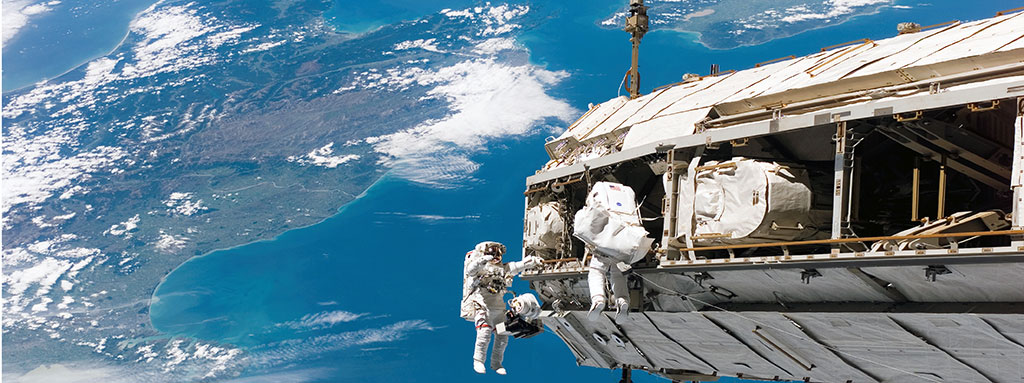
For many years, we have talked about and enjoyed the so-called space race. Human beings were finally able to achieve an ancient dream. To achieve this, technological know-how and the capacity and ambition of some countries to overcome unattainable budgetary challenges had to meet in time. Curiously enough, the great driving force, in addition to the spirit of adventure, was demonstrating the superiority of some great powers over others. This race with huge budgets could only be afforded by large nations or groupings of nations. To organise the efforts, space agencies (NASA, ESA, etc.) were created as technological and administrative arms for the different national or supranational projects. With this way of getting into space progress was made on the basis of state budgets and with them we have lived through some very intense periods and others of too much calm. After 50 years of incursions into space, the rules of the game have finally changed.
The commercial race is on: there are many more people with ideas and the financial capacity to find their place in space.
Although the tractor shift from state to corporate budgets has been slowly taking place for years, it is only recently that we have seen a real commercial revolution in this fabulous race. Technology has continued to advance in order to become more accessible.In addition, large companies are able to generate more resources by betting more heavily, and a certain wave of the cult of entrepreneurship and business ventures has done the rest. In just two or three years, new "private" names have appeared, taking on the risk and the leading role in the space adventure and, why not, in the business that can be guessed. Today we are talking about entrepreneurs such as Elon Musk, founder of SpaceXRichard Branson with Virgin Galactic or Jeff Bezos with Blue Origin. We read that Google buys Skyboxa start-up which manufactures and launches satellites. Planet Labs already has more than 70 satellites in orbit and announces a major investment for its constellation and OneWeb begins to develop its own. Major corporations such as Airbus and Safran join forces to develop new, more price-competitive satellite launchers. Deep Space Industries explains its plans for asteroid mining. Aerojet Rocketdyne and ULA, joint venture between Boeing and Lockheed Martin, are studying the development of new rocket engines. Numerous companies or foundations have the economic capacity to launch microsatellites or CubeSats for all kinds of purposes. And of course companies in the telecommunications or earth observation business are increasingly investing in space as an essential part of their business model.
In short, it is no longer just the budgets of the major powers that are the driving force; the commercial race is on and there are many more people with the ideas and the financial capacity to find their place in space.. Private investment as a driving force is a decisive new stimulus, a multiplier of initiatives and the emergence of commercial competition. Now we are going to make rapid progress while at the same time seeking efficiency in the effort. There is one thing I always say: any industrial or technological sector can get better or worse depending on what happens, but space has only one forecast, to keep growing. And we are just getting started.