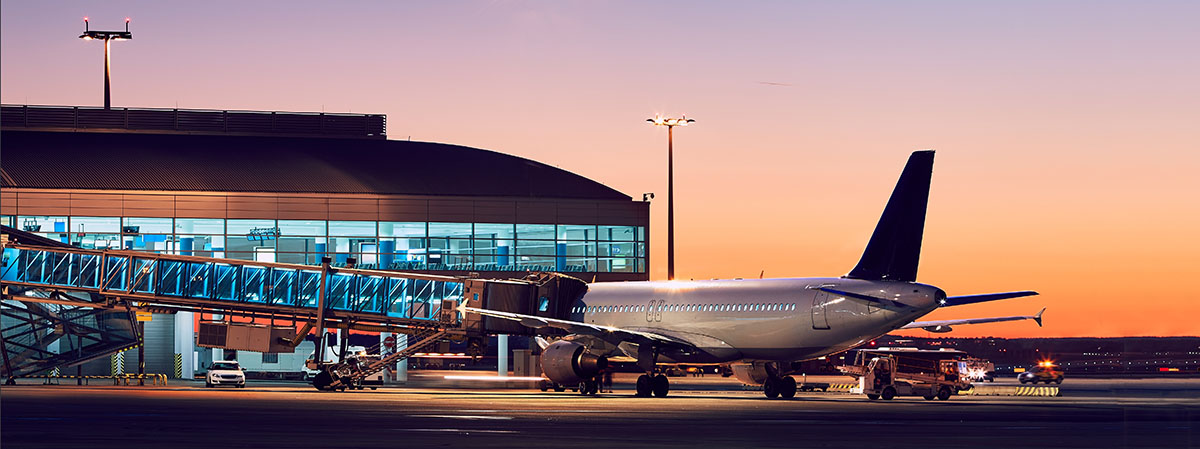
A aircraft in flight produces a large amount of vibrations in its structure. due to the action of the forces of the air as it performs the thrust that supports it. In aeronautical design engineering, the action of vibrations is a very serious study that requires attention and calculation, a lot of calculation. One of the most feared effects of vibrations on the aircraft structure is flutter.
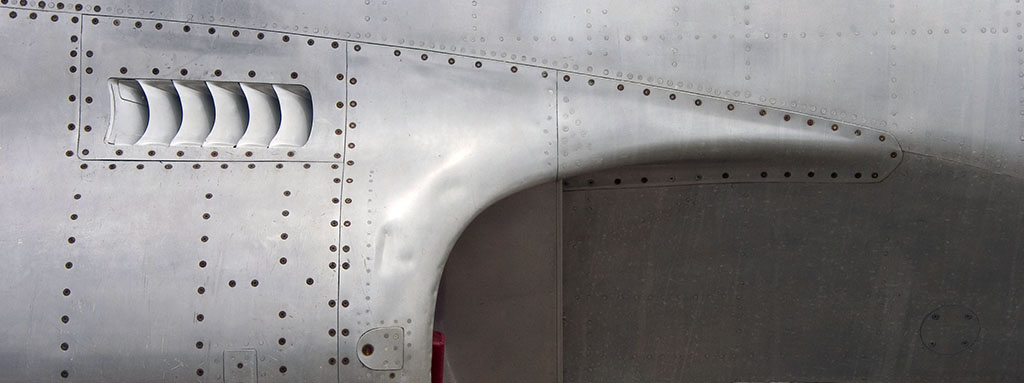
Rivets provide the flexibility and strength necessary to withstand the actions of the forces and frequencies exerted on an aircraft structure in flight.
This action of vibrations makes it necessary that the joints of the parts of the aircraft structure cannot be weldedThe strength of two welded parts joined together (either electrically or thermally) makes this welding a very effective way of welding. stiff, inflexible and weak point The points where there are welded parts will be points of rupture at certain frequencies. If we wanted to join parts of the aircraft by welding, we would have to lower the flight speed to prevent the vibrations from reaching the resonance point of the joints.
Before the existence of arc welding, plasma welding or any other method, industry used to join parts by means of the system known as "latticework".consisting of the riveting of parts. In the shipbuilding industry, steel plates were riveted with solid shank rivets that were brought to near their rivet liquefaction point (making the iron red hot) and struck by a riveter and a shoring tool.
Nowadays, the joining of parts in aeronautics uses this system, but the rivet is not heated, of course. A riveting gives us the quality of neither party is overheated (as occurs in welding and which causes atomic rearrangement of the area affected by the heating) allowing the material to remain structurally intact with its properties in relation to its capacity to withstand vibrations and its flexibility. The only damage that the material will suffer is the damage caused by drilling and the forces exerted during riveting.
In relation to the riveting force mentioned above, this is calculated and applied by the riveter - shoring team in their riveting operation. The riveter has the responsibility to strike the rivet with the precise accuracy and thrust so that the rivet is not damaged, whilst the shoring It ensures that the force and inclination of the rivet is as perfect as possible and that the rivet's locking head is the right one. It is an operation that requires a certain precision, as well as the tact of the operators and experience; a team of riveters can usually detect the rivet's striking and shoring point by the sound of the rivet or with the naked eye, verifying that the fasteners are correct once they have been checked with their corresponding gauges.
In the design of the areas where the rivets will be placed, the distance between the rivets is calculated to be such that does not lead to the possibility of cracking in the assembly process or the occurrence of forces in flight. There is a very direct relationship between the thickness of the material to be riveted, the length of the rivet to be set and the characteristics of the material itself. The riveting lines are not usually visible to the naked eye, and even less so once the structure has been painted. This is due to the fact that, if the riveting is correct, the forces applied to the parts are sufficient to carry out the necessary rivet closing work, but not to deform the material of the parts to be joined; a correctly riveted structure is completely smooth if we pass our hand over it. Any deformation that we notice on the riveted parts will be points where excessive forces are being exerted and possible breakage in flight.
The union of two parts by means of the solid cane rivet system gives it, as we have said, the following characteristics, the necessary flexibility and strength to withstand the actions of the forces and frequencies that will be exerted on the aeronautical structure in flight, being up to now the only means of covering our aircraft. Perhaps in the not too distant future it will be possible to join two parts at the atomic level to make the two pieces into a single one while retaining all the properties of the material, especially in relation to vibrations, thus making our aircraft even safer and more responsive.