After three years of terrible warfare in Europe, in the spring of 1919The emerging aircraft industry was producing excellent new aircraft. The signing of the armistice had opened the door to peace, and thus the historic moment had arrived for the development of commercial air transport.
In 1919, a heroic flight and a series of coincidental circumstances decided where Malaga Airport would be built.
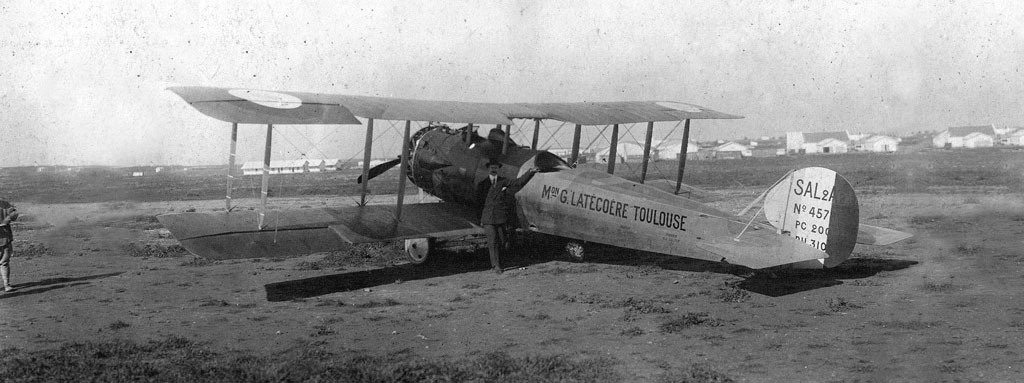
Pierre-Georges Latécoère was a businessman from Toulouse who had inherited an old family workshop. In the past, the factory had been dedicated to producing railway parts, but had also been able to provide aeronautical ingenuity to the French army during the Great War. However, his dream was not war, but to link France and South America through an airline. Before arriving in Santiago de Chile, he was determined to link Toulouse with Casablanca, the capital of the French protectorate of Morocco. It was a distance of just over 1850 km between the two cities. His single-engine, fabric-winged aircraft had a flight range of just 500 km. It was therefore necessary to divide the route into several stages and Malaga was chosen as one of these stopovers, in addition to Barcelona and Alicante.
Latécoère was a man of action. Frustrated by the administrative problems blocking his project, he decided to set it in motion without the support of the French government. He had already obtained authorisation from King Alfonso XIII to cross Spain and also had the financial backing of an Italian aristocrat friend of his. He therefore decided to fly to Casablanca by his own means to obtain the backing of General Lyautey, Governor General of the protectorate of Morocco.
Together with his men, he had already faced failure. During the first test, one of his planes had crashed in Barcelona and the propeller had failed; another had damaged the landing gear in Alicante. Hasteful organisation had led to misunderstandings and the runways had not been built correctly. Latécoère, determined to reach Casablanca, decided to send one of his pilots to Malaga to ensure that the runway was in good condition. He did not want to take any more useless risks. At the same time, he took a train to Toulouse to carry out further tests with a new aircraft.
On 8 March 1919, five days after the accidents in Barcelona and Alicante, Latécoère and his pilot Lamaitre took off once again from Montaudran Airport in Toulouse on board a Salmson 2A2 The flight to Barcelona went smoothly. They landed two hours later at La Volatería airfield and, after filling up with fuel and having something to eat, they continued their journey to Alicante, where they were met at Rabassa airfield after three hours. That afternoon, they tried to repair one of the damaged aircraft, but were unsuccessful. Latécoère, despite his comrades' insistence that he leave, followed his instinct and decided to continue their adventure with only one plane. He sent a telegram to Malaga to announce that they would arrive the following day.
The morning of 9 March 1919Latécoère looked at the sky with concern. A very adverse weather did not bode well. "What do we do?" he asked his pilot. They both looked at each other in silence, and then the pilot put on his leather gloves. "Malaga awaits us," he replied. A few minutes later, the roar of the engine overcame the murmurs of the Spanish authorities, the French technicians and the onlookers, and then the plane took off and was lost in the clouds.
Once in the air, Latécoère's worst predictions were confirmed. The drops from a heavy storm a few kilometres from Murcia were hitting the fragile fabric wings of the aircraft violently. If the rain turned to hail, they would be as leaky as his father's favourite cheese. "What do we do, turn back or continue?" he signalled to his pilot. To turn back meant defeat; to continue meant soaring above the clouds and flying above them. The decision was not an easy one.
In 1919, there were no navigational aids. The pilots followed the geographical reference points located on land. Since leaving Toulouse, they had been following the rivers and the French and Spanish coastline. If they managed to climb above the clouds, the clouds, which would be below the aircraft, would prevent them from seeing these landmarks. Precise navigation to Malaga would be impossible. They could fly over the sea for a hundred kilometres without realising it and, when it was too late, the lack of fuel would send them helplessly straight into the cold waters of the Mediterranean.
Moreover, getting through the cloud cover was a very dangerous manoeuvre. First of all, because they did not know how thick it was, and also because it would be a miracle if they managed to keep the plane horizontal while crossing the clouds. Subject to the force of the inertia of the aircraft's movement and the wind, they would become disorientated in the mist. They could end up upside down without realising it. Any attempt to fly without visual references was tantamount to suicide. Nevertheless, the pilot, without even responding to his boss, revved up the engine. They had to get through the dense low cloud cover at any cost.
Meanwhile, aviation enthusiasts and curious onlookers waited at the the makeshift airstrip located in La Misericordia, near the port of Málaga. A telegram had confirmed the departure of the flight from Alicante shortly after half past seven in the morning. The plane's delay was unusual; it should have landed in Malaga half an hour earlier. It was only a few minutes to three hours after departure and they only had enough fuel for a little more than three and a quarter hours of flight time. All eyes were on the Gibralfaro mountain but nobody could see anything. Nobody was moving.
Not far away, Latécoère signalled to his pilot. He pointed to something on the ground that could be made out among the clouds. It was the port of a large city: it must be Malaga. They breathed a sigh of relief; they had just over ten minutes of fuel left. They descended and circled around the spot that a colleague who had arrived earlier had chosen for the landing. On the ground, dozens of men and women looked on with a mixture of relief and anguish. After a few reconnaissance circles, the pilot could not make up his mind to land. The runway had a lot of water pools. due to the rain the night before. After the problems with the landings in Barcelona and Alicante, I didn't want to take any risks. Several hundred metres to the west, the pilot spotted fallow landnear the town of Churriana, which seemed safer for him to land. "Let's go there," he thought.
At that moment, the plane's engine started to fail. They looked at the needle on the fuel tank: it was almost empty. They had only a minute or two left, at best, but no more. They had to make a decision - and fast!
The pilot did not hesitate. He turned the controls and steered the plane towards the terrain that seemed safest to him. The plane descended, touched down too quickly and bounced like a stone that falls back down under its own weight. Once, twice. On the third time, they managed to roll the plane over uneven terrain that sent them tumbling like cowboys trotting on their horses. Shortly afterwards, the aircraft came to a halt. On 9 March 1919, at half past ten, had landed on the grounds of the Cortijo del Rompedizo.
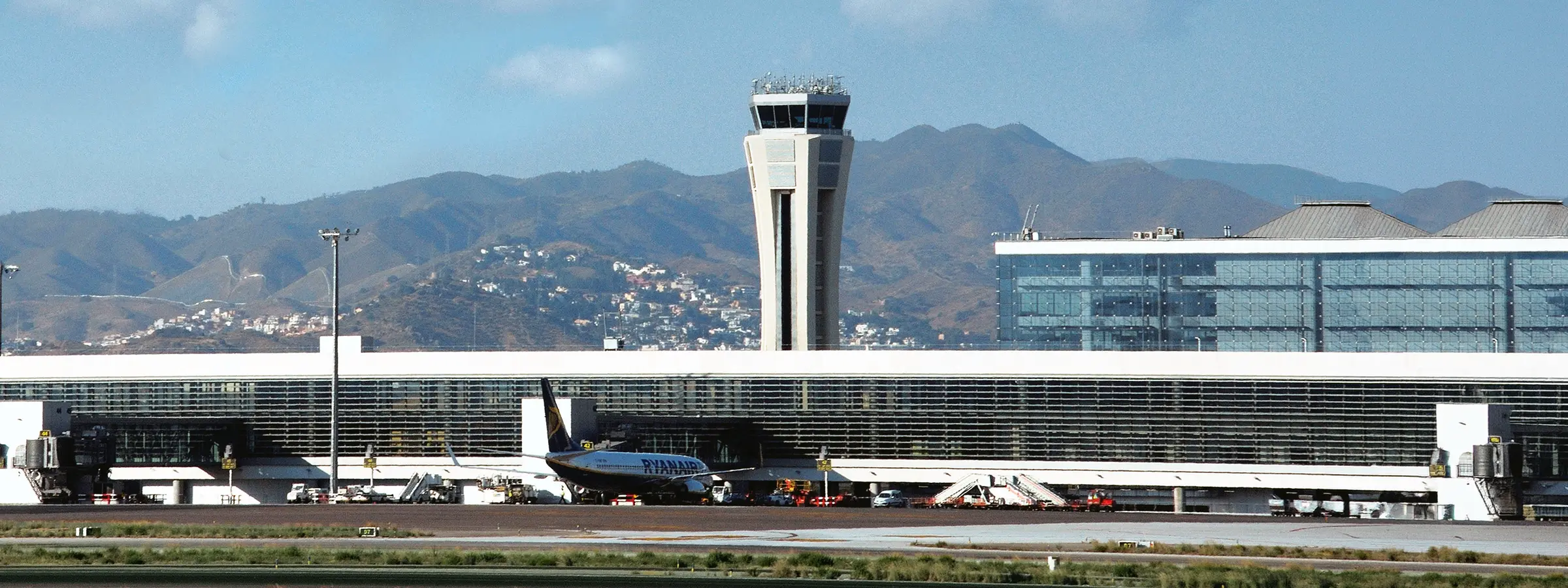
They didn't know it, but Malaga airport had just been inaugurated. At the last minute, they had chosen for their landing the land where the future airfield was to be built.
Note: At one o'clock in the afternoon on 9 March, the plane took off from Malaga bound for Rabat and Casablanca, where it arrived at 4.45 pm. On the 12th March, on the return journey, the plane had also planned to land on the beach of La Misericordia in Malaga, but once again the unstable terrain and prudence led them to decide on the El Rompedizo field. That same afternoon, Mr. Latécoère negotiated with the owner of the land, Félix Assiego, to rent it for 7,000 pesetas (42 euros) per year in order to build the aerodrome there.