The commercial strategy of airports must involve all stakeholders, from airport operators to passengers themselves, as well as the resources and technologies available at any given time.
The steady growth in global air traffic has consolidated airports not only as essential logistical infrastructures for today's society, but also as commercial platforms with a growing role in generating revenue. In this context, airport commercial strategy has become an essential component in sustaining financial viability, diversifying revenue sources and improving the passenger experience.
For a commercial strategy to be effective, it is essential to integrate all stakeholders: airport operators, airlines, concessionaires, service providers and, especially, passengers. This integration allows for the creation of synergies that increase both commercial revenue and overall user satisfaction.
Historically, non-aeronautical revenue, derived from activities outside the direct provision of flight services, such as duty-free shopping, catering, car parks and property leases, has accounted for a significant proportion of airport operators' total revenue. This revenue reduces dependence on aeronautical charges and strengthens financial resilience in the face of fluctuations in passenger traffic.
Integration of digital solutions
Modern commercial strategy combines traditional methods with digital solutions that optimise the use of the airport's physical and virtual environment. Digital services are becoming increasingly common. From mobile applications that allow passengers to stay up to date on flight information or available services, to the ability to order food or make purchases from their devices. All of this expands the commercial reach beyond traditional physical points within the terminal.
In the background, the collection of user data through digital systems and loyalty programmes provides valuable information about passenger preferences and behaviours. This information is used to personalise offers, optimise promotions and anticipate demand, improving both the experience and commercial conversion opportunities.
Importance of passenger footprint
A key concept in airport commercial planning is the passenger footprint, which measures the density and flow of traffic in different areas of the terminal. Understanding these movement patterns allows concessions to be strategically located, maximising sales opportunities without compromising service quality or passenger flow.
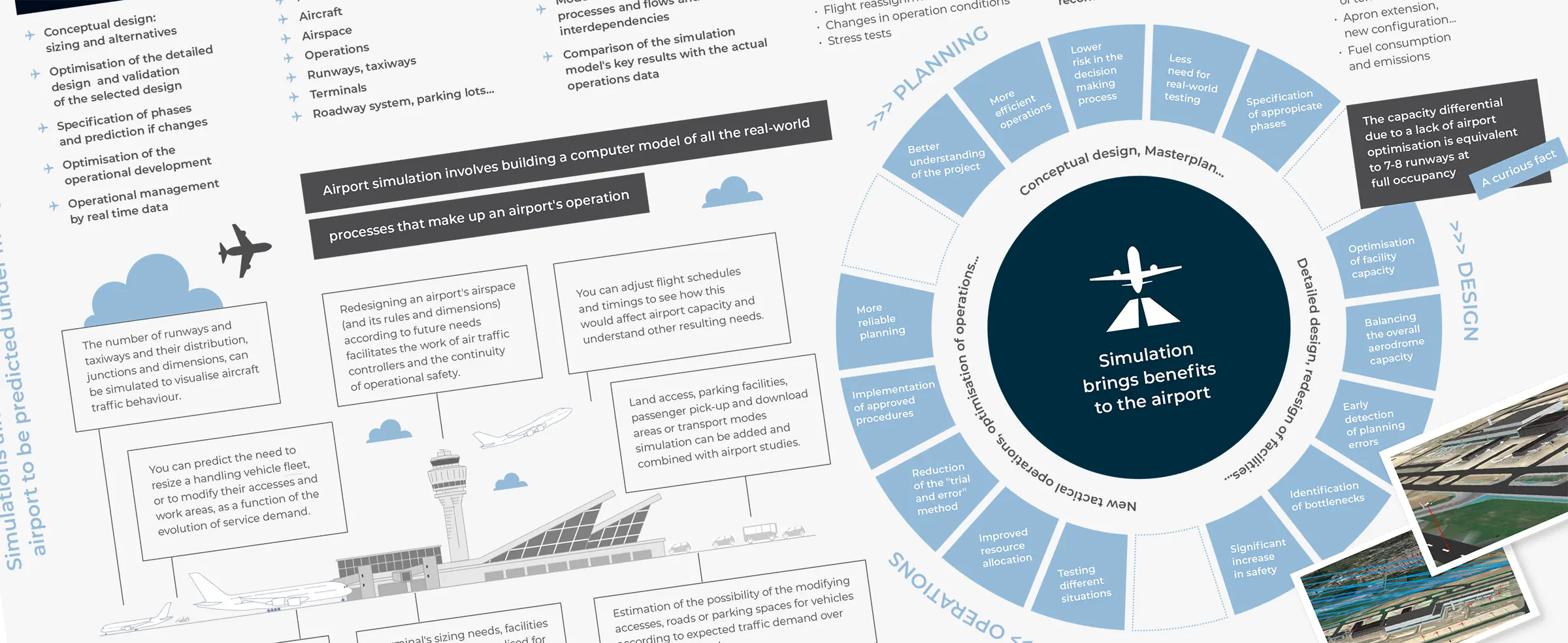
Dynamic simulation tools are also part of the technical repertoire for analysing passenger flow scenarios, allowing the design and location of concessions to be adjusted prior to physical implementation.
The growing role of artificial intelligence
In recent years, artificial intelligence (AI) has begun to have a tangible impact on airport commercial strategies. AI enables the analysis of large volumes of data on passenger behaviour, purchasing trends and traffic patterns to develop more accurate marketing campaigns, manage dynamic pricing and offer personalised recommendations that can increase commercial service revenue.
Furthermore, AI- and machine learning-based solutions are transforming the way passengers interact with airport services, from digital assistants that personalise offers to demand forecasting systems that facilitate real-time strategic decisions for retail spaces and concessions.
Recent examples in the sector show how AI initiatives applied to the airport environment can dynamically optimise prices, anticipate consumer trends and tailor commercial offerings to specific traveller segments, directly contributing to increased non-aeronautical revenue.
Indeed, airports' commercial strategy has evolved to respond to an environment where digitalisation and customer focus are paramount. Beyond traditional revenue streams, modern airports are driving their commercial performance by integrating digital tools, exploiting data and applying technologies such as artificial intelligence.
These strategies not only maximise non-aeronautical revenue, but also create a more seamless, personalised and engaging travel experience for passengers, cementing the airport's position as a hub of economic activity and services in constant transformation.
Related key topics: "Aviation«, «Airport consultancy» y «Operations".