Aerospace is an industry that never stands still, and ADS members are at the forefront of the next revolution in technology and research and development (R&D). From environmentally friendly propulsion methods for long-range aircraft to innovative wing designs for improved efficiency and sustainability, the aerospace industry is constantly evolving. One area where this is particularly exciting is the Advanced Air Mobilityor AAM for short.
The entire aviation ecosystem will have to adapt, from airspace and certification to production methods and skills.
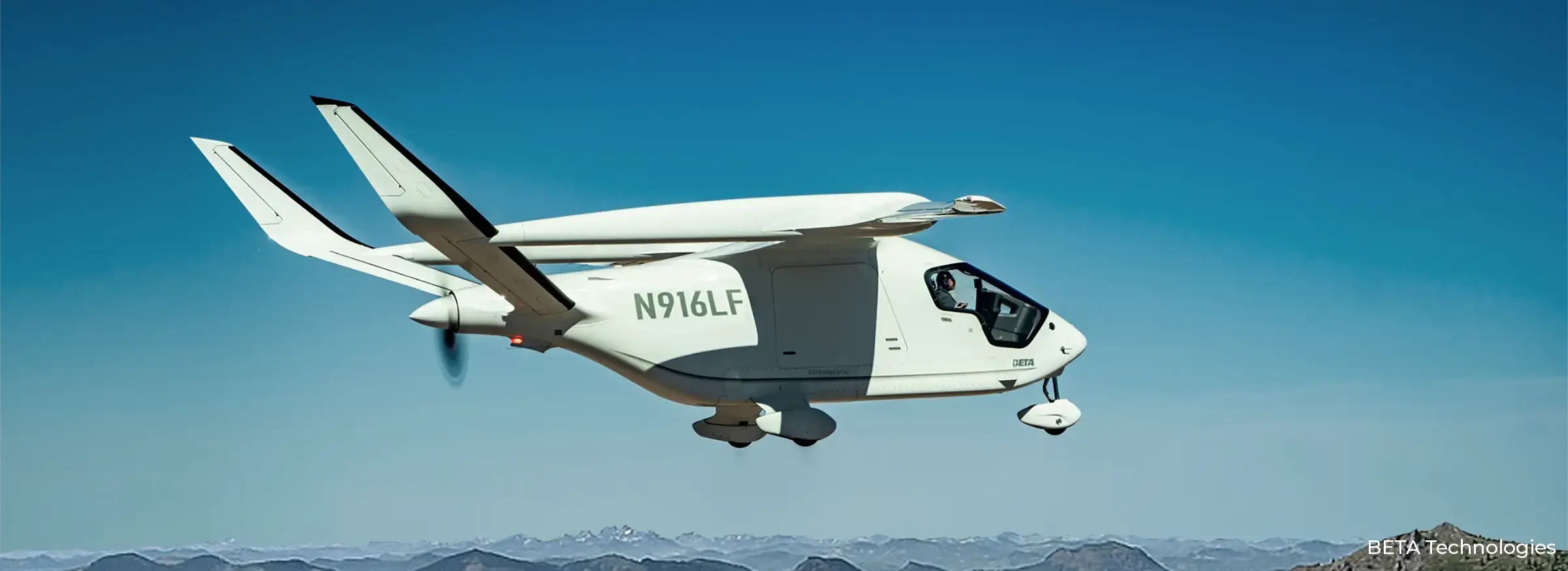
AAM contemplates the idea that, following a revolution in electric motors and batteries, a completely new operating model for aviation is possible. Electric vertical take-off and landing vehicles (eVTOLs) will enable shorter and more efficient routes, better connecting towns, cities and regions to each other and unlocking intra-city travel through the sky. In a 2021 report, the ADS described the potential future of aviation: a more decentralised distributed aviation system connecting more people in more places than ever before.
Despite the continuing impacts of the COVID-19 pandemic, 2021 was largely a year of growth for the emerging AAM space, with major eVTOL OEMs and ADS members Joby Aviation and Vertical Aerospace going public and raising significant levels of capital. But the focus now, in 2022, is on the certification and making AAM's promise a realitythrough a positive regulatory system and a solid manufacturing and skills base.
ADS, as the trade body for the UK aerospace, defence, space and security sectors, is naturally working closely with industry and the public sector, representing the entire AAM value chain, from OEMs in the UK and around the world, to Tier 1s and the wider supply chain. Through the ADS AAM Special Interest Group (SIG) (Special Interest Group (SIG) ADS AAM) as well as through the Global Urban and Advanced Air Summit (GUAAS) (Global Urban and Advanced Aviation Summit (GUAAS)), hosted by Farnborough International, ADS brings together industry, government, regulators and third parties to work collaboratively on solutions to the major obstacles that separate the now and a successful AAM industry.
As AAM grows and the vision becomes reality, these hurdles will also grow: the potential global scale of AAM means that the entire aviation ecosystem will need to adapt, from airspace and certification to production methods and, most importantly, skills. Change on this scale is not easy, but through effective and purposeful stakeholder collaboration, an innovative ecosystem can be provided to enable the generation of a safe and thriving AAM industry. Through ADS' expertise in solicitation, policy, regulation and business development, ADS will work to realise the potential of AAM in the UK, leveraging the leading global aerospace expertise that the country possesses.