Distributed electric propulsion has established itself as one of the most promising architectures in the transition towards more electric aircraft, representing a path of progressive optimisation that is closely linked to the constraints imposed at any given time by energy technology and regulatory developments.
Distributed electric propulsion involves the use of multiple electric propulsion units, connected to one or more power sources, which can be integrated throughout the aircraft with greater flexibility than in conventional configurations. This architecture allows for a rethinking of the relationship between propulsion, aerodynamics and flight control.
Its main value lies not only in electrification, but in the ability to optimise the aircraft’s overall design. Thrust distribution can improve aerodynamic efficiency, reduce the size of certain control surfaces, lower noise levels and increase the redundancy of the propulsion system. In operational terms, it also paves the way for more precise control during different phases of flight.
When incorporated from the early stages of design, distributed propulsion enables:
- Improving aerodynamic efficiency through the interaction between airflow and propellers.
- Reduce structural masses associated with control surfaces.
- Optimise performance during take-off, landing and cruise.
- Improve safety through the use of multiple engines.
- To reduce noise pollution, particularly in airport environments.
Programmes such as EcoPulse (a hybrid-electric aircraft technology demonstrator developed by Airbus, Daher and Safran) have validated this approach in flight, demonstrating that the combination of hybrid propulsion and electrical distribution can yield measurable improvements in efficiency and control, although there is as yet no immediate commercial application.
The main factor determining the electrification of aviation is not the propulsion system, but energy storage capacity. Current batteries have a significantly lower energy density than conventional fuels, which directly limits range, payload and economic viability.
This limitation explains why the most significant advances in electric aviation have been made in light, short-range aircraft. The most notable example is the EASA-certified Pipistrel Velis Electro, which has demonstrated operational viability in training flights, but also highlights the current limitations in terms of scale.
However, whilst striving to be realistic in this context, in recent years several programmes have helped to redefine the level of maturity of aviation electrification:
- The P-Volt programme, aimed at electric regional aviation, was postponed until 2023 as the necessary technological and economic conditions have not yet been met.
- The EcoPulse demonstrator successfully completed its flight test phase (2023–2024), providing key insights into hybrid-electric integration.
- The proyecto X-57 Maxwell de la NASA fue cancelado en 2024 antes de volar, aunque generó avances relevantes en sistemas eléctricos y certificación.
These cases reflect a clear trend: technological development is continuing, with significant progress being made in specific areas, but the timetables for commissioning have been adjusted to reflect the system’s actual limitations.
Regulatory developments are also keeping pace with this process. Authorities such as EASA and the FAA have made progress on specific regulatory frameworks for new aircraft configurations, including electric and powered-lift aircraft (particularly eVTOLs).
This regulatory progress is significant, as it shifts the focus of the challenge from conceptual feasibility to certification, operational safety, energy management and integration into the airspace.
Initially, electrification in aviation was seen primarily as a technological challenge: developing batteries with higher energy density, more efficient electric motors, lighter power systems, control electronics, and so on. In other words, the focus was on individual components and their technical feasibility. At this stage, even if the technology matures, the real bottleneck lies in how the entire ecosystem adapts and integrates.
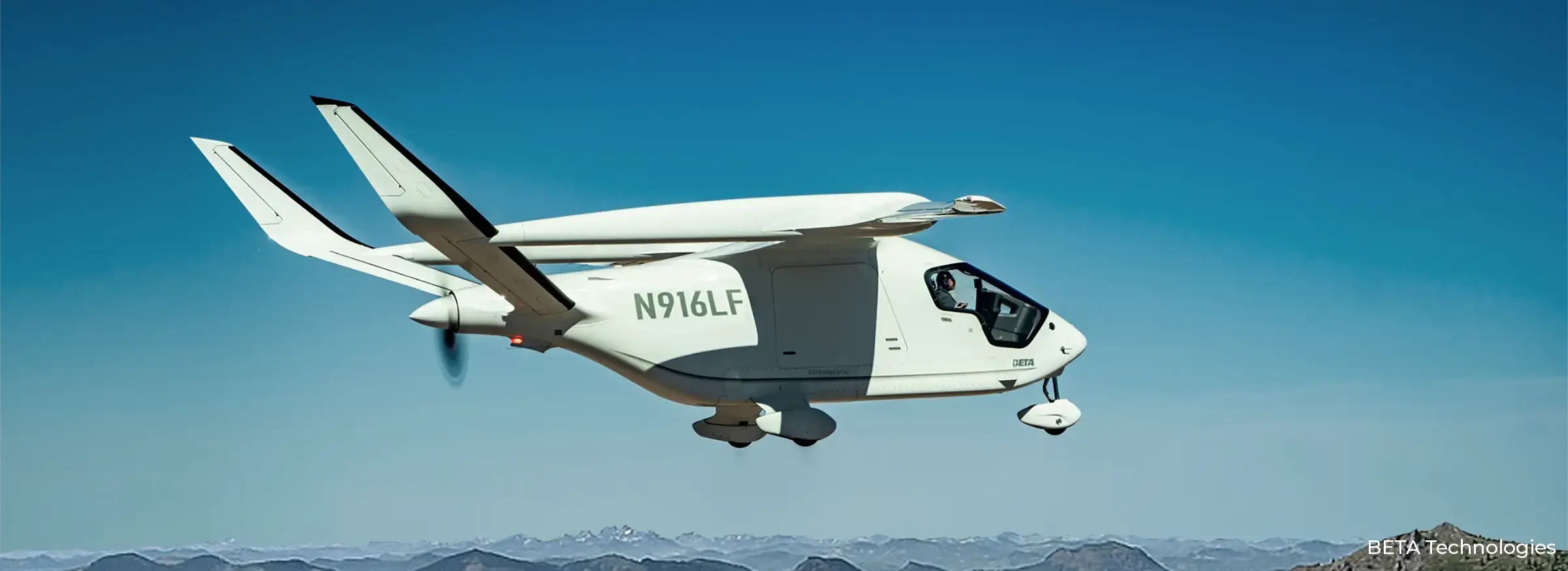
One notable success story is that of Beta Technologies, whose fully electric CX300 production aircraft received special airworthiness certification from the FAA in November 2024. This aircraft has not only overcome the various technological challenges it faced, but has also cleared the certification hurdle.
In the short and medium term, the most tangible impact of distributed electric propulsion is concentrated in three areas:
- Electric light aircraft, particularly for training and short-range operations.
- Hybrid systems, where electrification improves efficiency without completely replacing the internal combustion engine.
- Advanced aerial mobility (eVTOL and powered-lift), where the arrangement of the propulsion units is key to control, redundancy and design.
In these sectors, distributed electric propulsion is not only viable, but also a key enabler.
In short, distributed electric propulsion continues to play a central role in the evolution of aviation, but its contribution must be understood within the context of a gradual transition. It does not represent an immediate solution to replace conventional aviation across all its sectors, but rather a tool for improving efficiency, enabling new configurations and supporting the development of hybrid and electric systems.
Electrification in the aviation sector is already a reality in certain niche markets, but its expansion to larger aircraft will ultimately depend on significant advances in energy storage, systems integration and certification.
In this context, the value of distributed propulsion lies not in short-term promises, but in its ability to redefine aircraft design in the long term on a sound technical and operational basis.