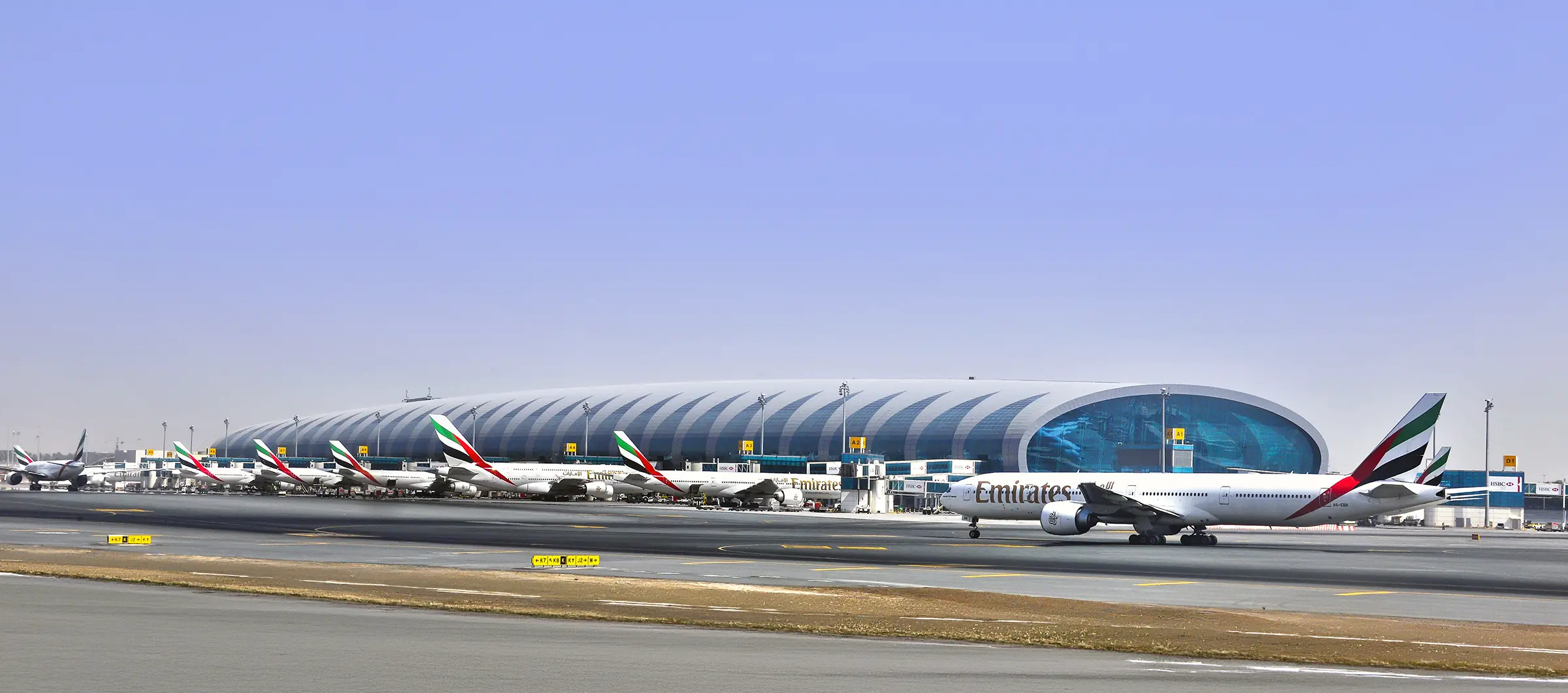
Some of Europe's busiest airports are already operating at full capacity. Unfortunately, the airport congestion is now a global trend. Moreover, it is becoming one of the main impediments to the development of air transport. According to Eurocontrol, twenty airports in Europe alone will reach their maximum capacity by 2035.
Airlines decrease the supply of difficult connecting routes in favour of routes with high point-to-point demand.
I recently read an article (1) which summarises the key findings of a study about how airlines respond to congestion at airports. One of the obvious conclusions of this study is that airport congestion is a drag on passenger growth and causes potential passengers to fly to and from different airports.
For example, take London-Heathrow. The capacity of this airport has reached a ceiling of about 480,000 aircraft movements per year. As a result, many airlines (and their passengers) fly to other airports. Missing" passengers travelling to the area choose other airports nearby hubs that are not as congested as Gatwick, Stansted or Luton. In the case of international transit passengers, they travel to their final destination via another intercontinental hub. Inevitably, airports such as Amsterdam, Frankfurt, Paris Charles-de-Gaulle and even Madrid are picking up the spoils generated by Heathrow's inability to convince the region of the urgent need for expansion.
However, one of the conclusions of the aforementioned study was that (1) that I found particularly interesting is that decreases network connectivity. According to the study, as airport congestion increases, airlines tend to increase the frequency of flights on existing routes. For example, by increasing the number of flights from Rome to Heathrow rather than offering new destinations. In other words, congestion causes airlines to offer more flights to fewer destinations. If you think about it carefully, it makes sense: "airlines decrease the supply of difficult connecting routes in favour of routes with a high point-to-point demand, as these are more profitable".
This is a very interesting conclusion, as it offers a business opportunity for competition with available capacity. Nearby airports can provide the connectivity demanded by the region that the congested airport cannot meet. Competing hubs can also increase their offer to new destinations by capturing the passengers that cannot fly through the congested airport. Airport competition is real and commercial airports will waste no time in exploiting the shortcomings of others to poach passengers from "abandoned" routes.
Airport developers should bear this in mind. It is estimated that airports can generate between 2,000 and 4,000 jobs per million passengers. In the same study(1) it indicates that, if it were not capacity constrained, Heathrow airport could handle 15 million more passengers. Do the maths for yourself.

(1) Gridlock on the ground: How airlines can respond to airport congestion. (Congestion on the ground: how airlines can respond to airport congestion). Authors: Jaap Bouwer, Dominic Maxwell and Steve Saxon. August 2015