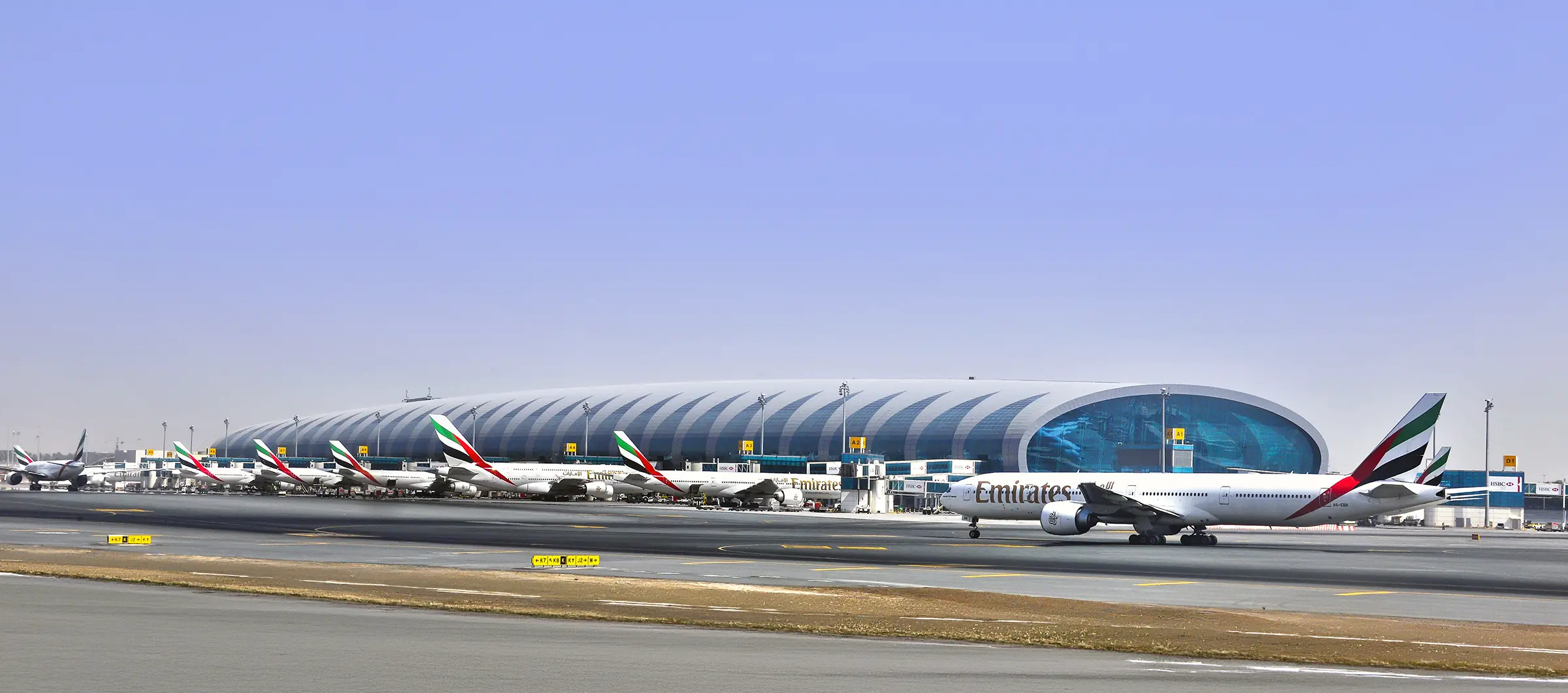
There are airports where sustainability is practically a matter of survival, as it was decades ago, rather than a contrived marketing concept.
The 20th century marked a paradigm shift in architecture (in a good way) that can be defined as the transition from the tectonic to the mechanical, from the mechanical to the electronic, and from the electronic to the thermodynamic.
What is thermodynamic beauty? It consists of trying to do the most with the least, using constructive solutions appropriate to a given location. It is the beauty that results from putting the true concept of sustainability into practice.
The beauty of sustainability should prevail regardless of the functional programme we are working on. Whether it is an airport or a home. However, in general, the design of current airport terminals assumes a series of characteristics that in no way help to achieve such beauty.
Contemporary terminals tend to have large spans, emulating those early hangars that sheltered biplanes at the dawn of the aviation era and which have evolved into the huge check-in halls we know today. Of course, these spans require unconventional structural solutions, often with elements that require a great deal of energy to manufacture, transport and install.
Similarly, these large lobbies, as well as boarding gates and many other areas of terminals, often have excessive heights. The justification is usually the scale of the space and the large number of people who occupy it simultaneously. However, these immense volumes require an unjustifiable amount of energy to condition, light and/or maintain them.
These spaces can be just as pleasant with much less height, as is the case, for example, at the airport in the Region of Murcia, which has a boarding bridge that is only 360 cm high.
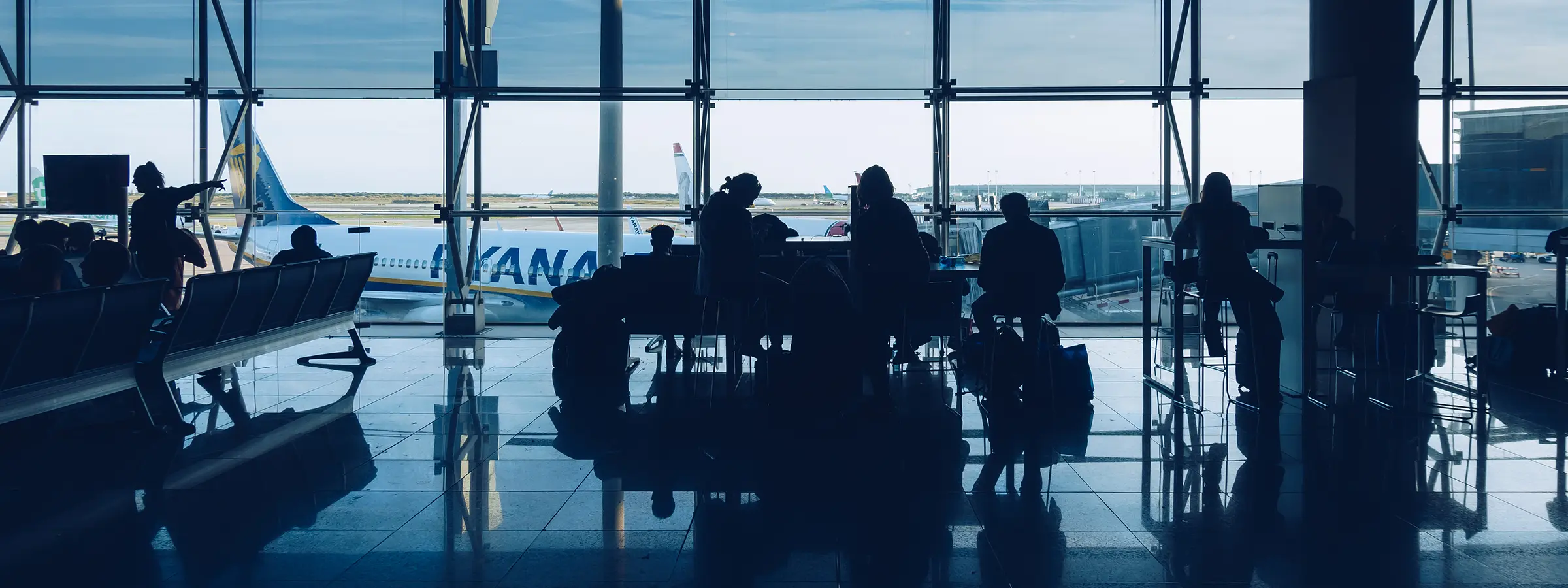
Another major attraction of a passenger terminal is the direct view of the airfield. Of course, the scenery of the apron and the runway are almost hypnotic. But this does not justify the design of complex and immense curtain walls, regardless of whether the view is, for example, towards the devastating west of our latitude. There are ways to open up these façades while effectively protecting them from solar radiation, as in the case of Dzaoudzi Pamandzi International Airport, located in the French department of Mayotte, whose façade facing the airfield is literally a completely covered Venetian blind.
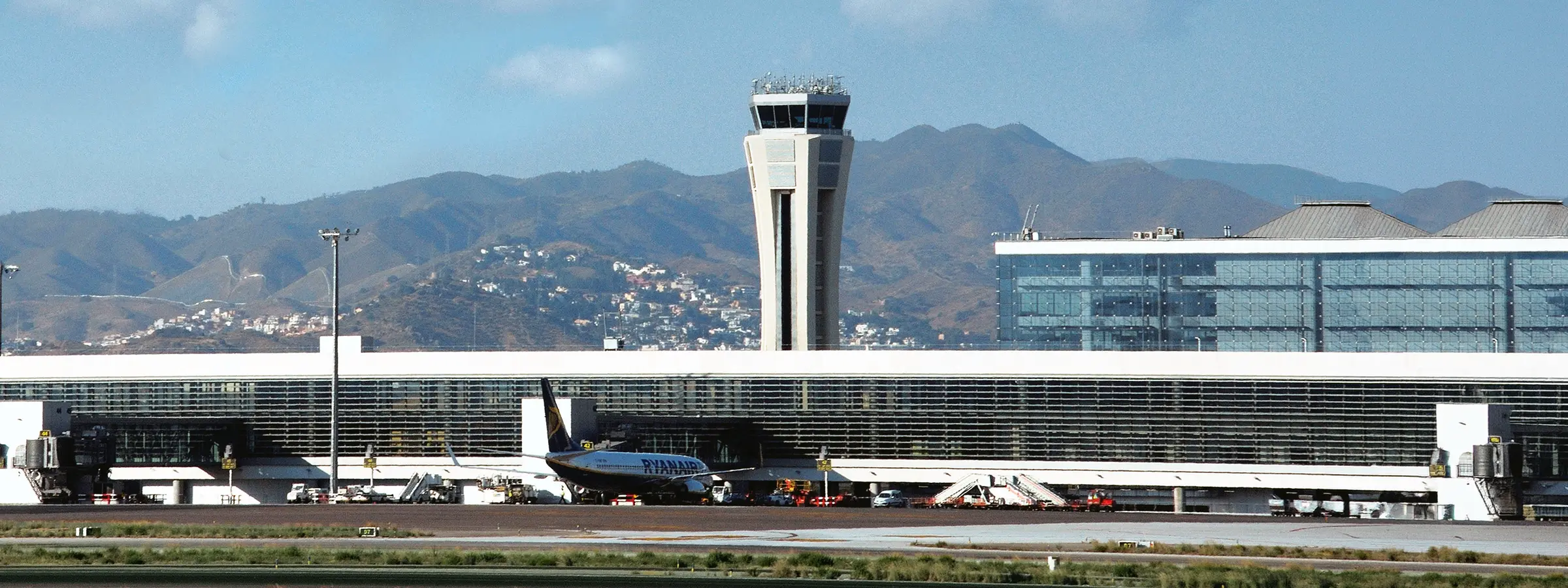
Designing an airport in a warm and relatively humid climate, such as Malaga, can in no way be similar to doing so in other more northern areas. The tools we need to use in a Mediterranean airport are probably more related to concepts such as shade structures, courtyards (which can also be used for future extensions), natural ventilation, and thick walls with the capacity to retain heat (thermal inertia). We should seek compact architecture with walls that can be inhabited and solutions that seek coolness and cast shade over the building itself and its surroundings.
Baltra Airport. Galápagos Islands, Ecuador
Nowhere are these strategies more important than at an island airport. In a previous post, we shared how the AERTEC team, together with the Cali-based architecture firm Espacio Colectivo, designed the passenger terminal on the island of Providencia in the Colombian Caribbean, putting precisely these principles into practice. One of the references we looked at at the time was what is possibly one of the best examples of a comprehensive solution, which not only takes into account thermodynamic design, but also aspects such as transport, execution and subsequent maintenance: the airport on the Galapagos Islands, located 2,400 km off the coast of Ecuador, the country to which it belongs.
In this case, sustainability is practically (as it was decades ago) a matter of survival, not a contrived marketing concept. And it is striking that the solutions applied are overwhelmingly simple. An example of how to resolve these complex situations that only depends on paying attention to local conditions, having reliable climate data and managing it accurately and appropriately to optimise the use of energy, lighting and water consumption.
In this case, sustainability is practically (as it was decades ago) a matter of survival, not a contrived marketing concept.. And it is striking that the solutions applied are overwhelmingly simple. An example of how to resolve these complex situations that only depends on paying attention to local conditions, having reliable climate data and managing it accurately and appropriately to optimise the use of energy, lighting and water consumption.
The main strategies implemented in the Galápagos are:
- The use of recycled material from the demolition of the old terminal, as well as from other sources.
- And the use of natural lighting and ventilation.
- Y el uso de iluminación y ventilación naturales.
The implementation of these ‘headlines’ begins from the moment the first project decisions are made and continues through to the operation and maintenance of the infrastructure. Let's see how.
The first decision that has a significant impact on the terminal's performance is its location. In this case, the building is strategically positioned in relation to its surroundings, slightly modifying its orientation to align it with the prevailing winds in order to make the most of the local breeze. This consideration of climate is unusual when planning an airport. In a master plan, where the position of the passenger terminal in relation to the movement area and the airport complex begins to be decided, this aspect is rarely taken into account. In fact, wind at an airport is only an aeronautical input. It determines the orientation of the runway for obvious operational reasons.
The shape of the building itself promotes coolness by encouraging air movement through the use of covered and open courtyards, as well as large skylights that not only promote air circulation but also allow light to enter.
Equally essential are the materials and construction systems chosen for the terminal's construction. All materials used on site are recycled or have a low environmental impact. Aggregates from local quarries were used for the agglomerates, volcanic stones from the island were used for the cladding, and even the structural steel and wood came from both the old terminal and dismantled oil extraction fields in Ecuador.
In addition, both the roof and the vertical walls are plastered in light colours that reflect solar radiation and help maintain the interior temperature.
Or, for example, concrete is used instead of asphalt on the runway itself, which means a reduction in the ambient temperature of between 2 and 5 degrees Celsius (heat island concept).
For the execution itself, prefabrication was chosen as a strategy to avoid further pollution in Baltra. To this end, the elements of the various systems were assembled on the mainland and then assembled on the island.
The shortage of fresh water is another problem that must be solved in such a remote location. The shape of the building also attempts to respond to this need. For this reason, the roof of the building is designed to facilitate rainwater collection. The airport also has its own desalination plant, as well as a wastewater treatment plant that allows a significant percentage of the water used in daily operations to be recycled.
Generating energy is another major challenge. In this case, all the airport's electricity comes from renewable sources, solar or wind power. To achieve this, there is a photovoltaic installation whose solar panels cover a large part of the complex's roads. A third of the electricity demand comes from this installation and the rest from wind turbines strategically located around the aerodrome.
It should be noted that this intervention philosophy extends beyond the building's design to other areas. For example, in terms of equipment, the baggage collection carousels operate using a gravitational system based on inclined planes where suitcases are held on rods and rotating cylinders without the need for electricity. Or in the urinals, where no water is used, thus promoting a reduction in consumption.
Less energy, less consumption, less dependence on mechanical systems, fewer maintenance issues.
The image of Baltra Airport bears little resemblance to that of a conventional contemporary airport. And perhaps that is the problem: when one thinks of a house in Norway, one does not imagine an open construction surrounded by sun protection elements. But when we think of an airport terminal, regardless of its location, we always imagine the same building.
Temas que complementan este post: planificación y diseño de aeropuertos.