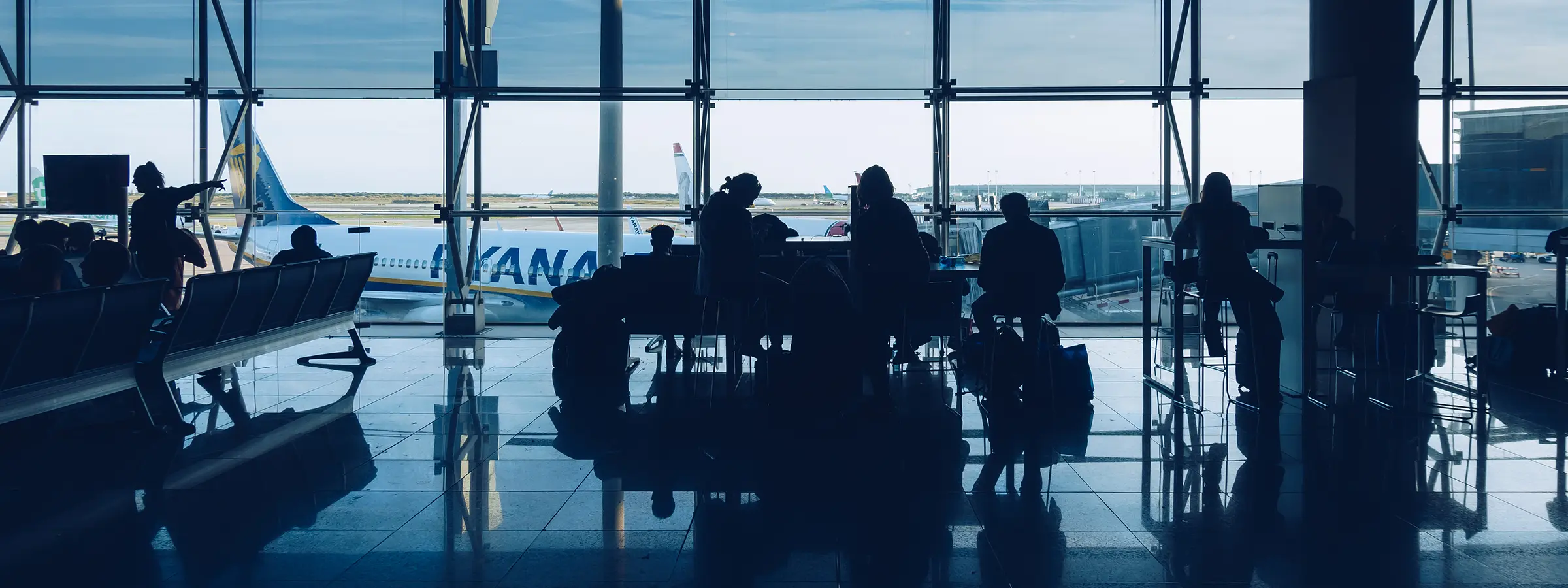
The big goal we must all set ourselves is to move airports from being a place you have to go to a place you want to be.
Cuando diseñamos nuevos aeropuertos o cuando ampliamos los ya existentes, la correct planning of needs is crucial for their proper functioning. However, this is already insufficient today as, in addition to thinking about capacity, priority must be given to improving the passenger experience.
De hecho, se trata de un aspecto con grandes dosis de complejidad y dificultad, porque los pasajeros son cada vez más exigentes.
The passenger experience has evolved in such a way that in order to attract passengers to our airports, we cannot be satisfied with just having a good range of destinations and connections, but we must consider and analyse everything that happens from the time the passenger leaves home until he/she returns home..
Decimos que los airports of the future have to be Seamless, Smarter, Friendler, Greener y Safer. Todos estos conceptos de diseño se interrelacionan entre sí y deben aplicarse entendiendo bien el comportamiento de los pasajeros y cómo evoluciona.
In order to achieve seamless airports is essential include proactive services with seamless interactions between processesThe new technologies, as they allow for more real-time solutions that anticipate passengers' needs and preferences.
We have to facilitate the entire travel process for passengers, from the beginning, before they arrive at the airport, to the end, when the passenger lands at the airport and wants to get home or to the hotel as soon as possible. This requires incorporating an integrated mobility strategy into the processes.
In addition, the design of an adequate guidance system is key.wayfinding) for the passenger, understanding that airports have complex layouts, with a dynamic environment, with a diversity of passengers and in a multilingual environment.
The new trends include digital signage with real time information, among others: distance and time to boarding gates depending on the existing demand or information and status of the bags in the baggage claim area (bags disembarking, bags disembarked, bags at security controls, bags on the baggage claim conveyor belt...), that reduce passenger anxiety and consequently improve perceived quality.
In order to achieve a smarter airport (smarter), all airport processes must be developed in a highly efficient way to improve the passenger experience. This requires the development of an IT Master Plan that includes the technology systems that deliver operational improvements to all stakeholders.
Available solutions that suit each airport need to be explored considering the growing role of IoT (Internet of Things), AI (Artificial Intelligence) and emerging technologies to reduce process times. By achieving this goal, passengers can decide what they want to do during their time at airports, allowing them to spend it in the shopping, dining and entertainment areas rather than queuing.
For provide passengers with a better level of self-control on their journeyIn order to ensure a smooth and efficient flow, it is necessary to understand their behaviours and the level of stress they experience during their passage through the terminal building as part of their journey.
We move from green, where passengers are not under stress (mainly in the shopping and F&B area), to yellow, where passengers tend to start thinking about their journey in advance: ¿When or how far in advance should I arrive at the airport, where can I park my car next to the terminal building? The level of stress increases before check-in, as passengers ask themselves: "Do you want to check in?Where can I check in and how long will it take?
The most stressful process is the security check, which results in a diminished passenger experience, followed by passport control.
In practice, we have the potential to reduce the passenger's stress level and therefore improve their experience during their stay at the airport by incorporating systems and processes that achieve a smarter airport.
In order to achieve friendlier airports (friendler) the experiences they offer need to be personalised, providing a memorable, inclusive and enjoyable experience.
Some details that will help us to create an airport friendler are:
- Obtain a positive sense of the airport's location by including architectural elements influenced by local culture, art and regional customs.
- In the same way, the culinary offer at the airport must provide a varied offer for all passengers' tastes. Through catering, passengers' memories can be built and their travel experience can be completed.
- To reduce stress, the inclusion of green areas, large open spaces for concerts and exhibitions, play areas for children and sports, as well as audio-visual entertainment is relevant.
- Include wellness and rest areas, relaxation areas (de-stressing) or work areas to meet the needs of passengers. To this end, both the design of the areas and the choice of furniture must be studied.
- Another important objective is to find a large, open area at the airport that conveys a sense of calm and happiness to all passengers before they board the plane.
- Including high-end lounges is also a key point when selecting airports for prime and business passengers, and even more so for transit passengers.
From the point of view of commercial areas it is important to define the best location for catering and retail areas, as well as to define the size and types with the aim of provide an appropriate commercial offer at each step of the processThe passenger's spending opportunities in waiting areas close to the boarding gate, such as the docks, should be taken advantage of. To this end, there are several points to consider:
- Provide adequate commercial offerings at every step of the passenger process, "from check-in to the boarding gate".
- Ensure that the commercial offer is positioned within and along the passenger flow to the boarding gates.
- Catering businesses are mixed with retail businesses, and not separated in a retail-only shopping plaza in order to increase the exposure of this offer to passengers.
- The design of commercial areas in leading airports for this purpose is diaphanous, without abusing physical separations in an "open plan" concept, delimiting commercial areas by means of interior architecture tools (lighting, flooring, etc.). In this way, the commercial areas will be integrated into the passenger flow without impeding or reducing their comfort.
- In the case of arrivals, a Duty Free is usually located and an area with catering and retail outlets must be provided for accompanying persons/visitors.
In addition to these criteria, it is desirable to identify tools that provide passengers with information on shopping, catering and leisure/entertainment facilities before arriving at the airport. This information should try to be personalised according to criteria such as the length of time the passenger stays at the airport, the origin or destination, whether the passenger is a transit passenger, or the purpose of the journey (holiday / business).
A major challenge is to personalise that informationThis requires obtaining real passenger data without breaching data protection policies.
However, there are also alternative ways of doing this. One of them is, for example, to involve the airlines that fly to our airports to provide such information on flights. Passengers spend hours on the aircraft and can take advantage of this to plan their time at the airport. Make a reservation at a restaurant, plan a massage or hairdressing session, time at the gym or buy an item at an airport shop to "click and collect" on arrival.
Another criterion in the improvement of airports is that of the sustainability.
We must pursue environmentally friendly solutions to make air transport and individual airports increasingly sustainable. To this end, we must start by complying with the programmes and initiatives of the Sustainability Action Plan, working from a circular economy perspective right from the design stage. To be taken into account:
- The technology is mature enough to improve energy efficiency and offer renewable energy solutions.
- The use of local resources to reduce emissions in the transport of food and goods, as well as actions to reduce the use of plastic.
- Airports are ecosystems through which a large number of people pass, so promoting CSR initiatives from the airport constitutes a positive impact for passengers and the entire airport environment.
- To address impacts on biodiversity, many solutions can be applied such as green roofs or producing plantations for different purposes within airport facilities.
Include integrated technology designed to ensure the airport security (safer)from initial detection to final response.
To have effective and efficient operation without losing sight of the passenger experience depends to a large extent on technological systems. that support airport operations. This is why new technological solutions must be considered from the earliest stages of design, both in new terminals and in extensions and refurbishments.
In order to achieve the digital transformation of airports a selection of technological tools is required to support an improved and predictable experience for passengers, staff, airlines and other stakeholders.
The cost of implementing these technological solutions at airports needs to be analysed in detail. However, in the same way that flying 40 years ago was a privilege of the few because of its cost, technology is becoming cheaper and cheaper. Moreover, the use of new technologies, their flexibility and scalability, and the improvements that their integration will bring in capacity and service level will reduce operating costs.
There is no perfect terminal model, it is necessary to adapt airports to our passengers and try to create a design in which the demands and expectations of the greatest number of passengers are met. This is undoubtedly a complex exercise and a motivating challenge for airport planning professionals.
The aim is to ensure that airports are no longer a place you have to go to, but a place you want to be.. By achieving this objective, we achieve a double benefit: on the one hand, we improve the passenger experience, and on the other hand, we increase commercial revenue, thus benefiting both the passenger and the airport operator.