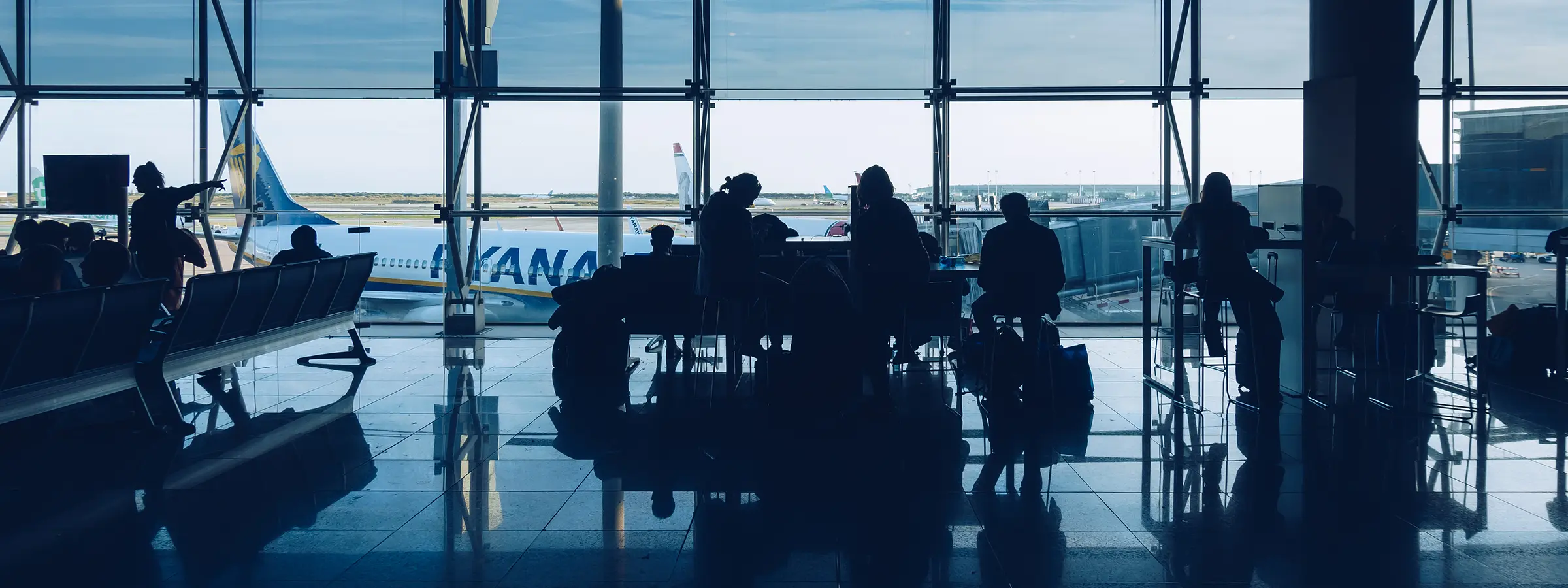
Over the last two decades, low-cost airlines – LCC (Low Cost Carrier) - have captured a large share of air transport activity worldwide. According to IATA, the LCCs are already reaching a share of 24 % of total seat capacity worldwide. The LCC segment accounts for about 50 % in Italy and Spain. The flag carriers, once the masters of the air transport business, have been swept out of the European short-haul market in less than ten years.
Gone are the golden years of exclusivity in aviation. Champagne and caviar are rarely seen on the tray anymore. Even the passenger sitting next to you is likely to bring home-made snacks for the journey. Short-haul air travel has become a commodity, where many passengers are attracted by the price of tickets. As a result, the airline that offers the lowest priceis the one that gets the sale.
In order to be able to offer such low tariffs, the LCCs are forced to become super-efficient at all levels, especially on land. Stopovers of 25 to 30 minutes are their target. Airports targeting LCCs must adapt to this new business environment. Here are some tips:
Airports, which until now have been a luxurious gateway for business people, must think about how to adapt their infrastructures to a new type of passenger.
- Airports with a single track are ideal for low-cost airlines. This allows them to minimise taxiing time after landing or before take-off.
- Aircraft parking spaces located in cul-de-sacs, accessible by a single taxiway, should be eliminated. Aircraft should unimpeded entry and exit at any time. While waiting for others, money is being thrown away.
- People don't mind waking up very early if it saves them money. Extending operations The LCCs' airport schedules in the early morning hours and after midnight allow them to add an additional flight to their daily schedule. This is good for low-cost airlines, as they make a living by doing as many flights per day as possible.
- The car parks of the aircraft must be at walking distance from the gate. Remote car parks should be avoided at all costs.
- The boarding pass and passenger identification must be checked in advance. This allows for faster boarding of aircraft. To this end, each gate should have its own pre-boarding area. It should be noted that pre-boarding is in conflict with the commercial interests of airports. Passengers can no longer shop once they are trapped in these areas.
Other criteria may apply. The LCCs demand cheap landing rights. The easiest way to offer them is through the construction of cheap infrastructure. Terminal buildings have often been a showcase for politicians and architects. After all, an airport is the gateway for tourists and businessmen. However, LCCs do not care about fancy terminal buildings, they only demand efficiency in their daily ground operations.
Obviously, excellent land transport links, motorways, a railway station and a railway station are a must. in-situa good bus network, etc. A airport is just one node in which air/land transport means are found.
Finally, LCC passengers are not stingy, they are just not willing to pay a lot for air travel. They like to shop like everyone else. Airports have a great opportunity to cash in on large amounts of money by providing large shopping areas. If money is to be spent on any kind of infrastructure, it should be on large, elegant shopping malls.
Have a good flight.