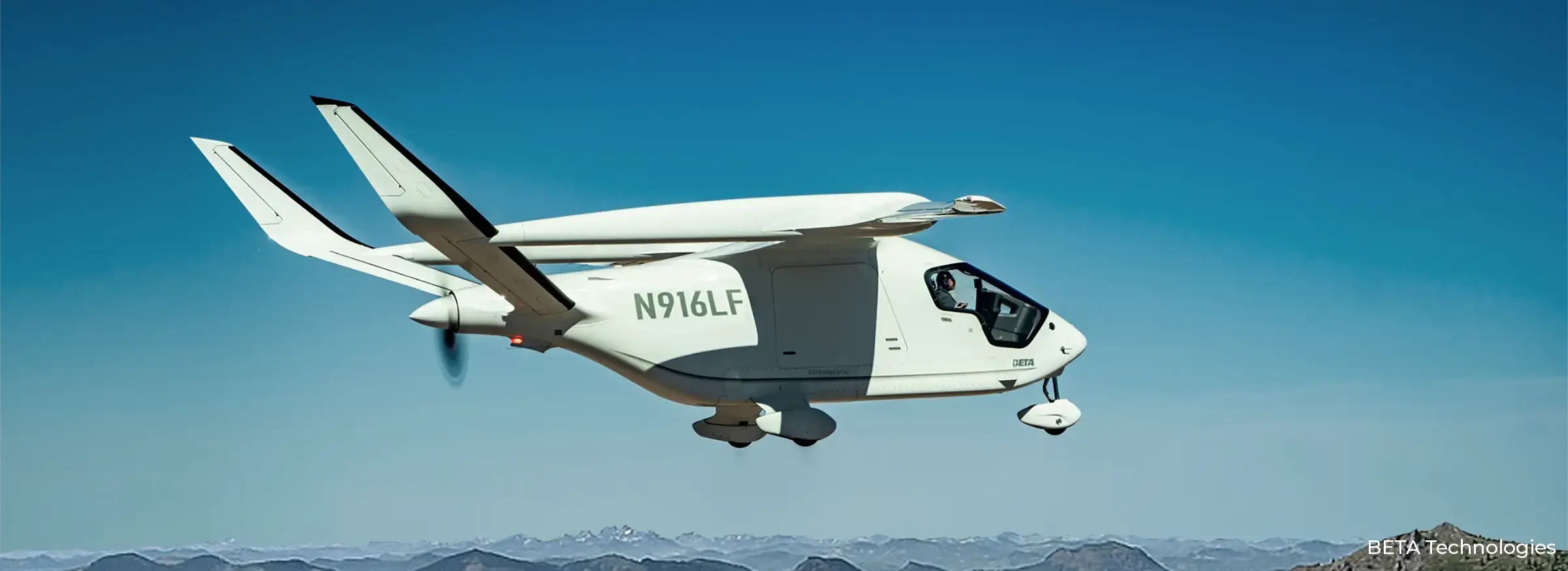
La Movilidad Aérea Avanzada será una realidad dentro de pocos años. Existen muchas iniciativas que se están desarrollando en todo el mundo, pero será la implicación conjunta de todos los agentes la que conducirá al desarrollo de las primeras historias de éxito.
The transport of persons and goods has been essential to the human development. This has led to the creation of important land, sea and air communication routes, which have enabled and encouraged the globalisation, una disminución importante en los costes y una reducción de tiempos de transporte.
Similarly, the mobility within cities has been evolving hand in hand with population growth, and is a major challenge today, not only because of the odyssey that can be involved in travelling between two points in a large city, due to the distances and time involved, but also because of the environmental emissions they represent and the detriment to the quality of life of urban dwellers.
This is why a large part of the efforts made by the different agencies have been focused on the improvement and prioritisation of means of transportThe aim is to discourage the use of private motor vehicles and encourage the use of public transport and zero-emission vehicles.
This view is shared by the Comisión Europea y la ONU en la Agenda 2030 sobre objetivos de Desarrollo SostenibleThe EU is also being promoted by different governments and public bodies.
Along these lines, the Institute for Energy Diversification and Saving (IDEA) has developed the "urban mobility pyramid". to help raise awareness of the importance of prioritising different types of transport in cities in the creation of sustainability policies. It highlights that mobility in cities should be encouraged in the following ways:
- Pedestrians
- Cyclists
- Public transport
- Urban distribution of goods
- Shared vehicles
- Private vehicles
At present, half of the global population lives in cities (3500 millones de personas) y se estima que para el año 2030 esta cifra aumente a 5000 millones de personas. Sí, además, tenemos en cuenta que las urbes representan el 75% de las emisiones de carbono (diferentes estudios estiman que más del 70% de estas emisiones son generadas por el transporte terrestre), estas presentan un nodo importante de mejora para el sostenimiento del planeta.
From this arises the need to HUB creations (hubs) where the different public transport systems are integrated: metro, rail, bus and airports.
The vertiports are a example of these types of hubs, donde se pretende conectar e integrar los sistemas de transporte urbano presentes y futuros de personas y mercancías de forma aérea. Los vertipuertos se consideran no solo como estaciones para el transporte de personas, sino también como centros de energía renovable, datos y servicios públicos.
The cities around the worldThe new landfills, with a focus on those where the demand for land has caused the price of land to rise significantly, face an added challenge with the arrival of landfills. These will compete for space that is already quite limited.
For Advanced Air Mobility (AMM) to be successful, the vertiports must be located as close as possible to the demand of VTOL (Vertical Take-Off and Landing Vehicles) users, otherwise, if after using VTOL a MAA user has to take a long walk, make a long transfer to another mode of transport, etc., he/she will probably prefer to use one of the traditional means.
It is for this reason that, on the one hand, the proliferation of a network of ports and harbours with the highest number of nodes possible. On the other hand, options need to be developed that take into account all possible locations of these nodes from which users will access the MAA.
In particular, account should be taken of the situation in which they will find themselves in densely populated areas (business areas, shopping centres, high density residential neighbourhoods, etc.). In many of these areas, there will be space constraints, and it will not be possible to build the jetties above ground due to insufficient available space. In these cases, they will be located on rooftops or elevated structures on streets or even platforms on water surfaces.
The extension of the MAA network may also lead to the construction of landfill sites in more remote areaswhere spatial restrictions are fewer and a wider range of services can be offered.
The vertiports have an iMuch less impact on the landscape and the environment. than traditional infrastructure such as roads, railways, waterways, canals, pipelines and terminals such as airports, railway stations, bus stations and seaports.
With the capacity to absorb current freight and passenger transport functions by traditional fossil-fuel dependent modes of transport, there is no doubt that the market based on the eVTOL for the transport of goods and people across the city is about to take off.
It is expected that this type of transport will become significantly cheaper over time for a variety of reasons:
- It is expected that these air taxis will be freelancers.
- Reduction of energy consumption compared to road travel, by using straighter routes at a constant speed.
- Energy costs required to propel them will be less. VTOLs can operate with different propulsion systems, ranging from hybrids with traditional combustion engines or gas turbines combined with electric motors to all-electric solutions.
Given that MAA services are new to customers and that VTOL vehicles always operate on public roads, both the acceptance of society and the confidence of future users MAA operations pose significant challenges, therefore, EASA and AIRBUS have conducted a comprehensive study of the social acceptance of MAA operations, which examines the attitudes, expectations and concerns of citizens, which need to be addressed in the development of the respective business models and operational concepts.
The main challenges are:
- Environmental challengesCoexisting with birds, noise pollution and energy consumption and visual impact.
- Security challengesThe possibility of bird strikes, meteorology, airspace/aviation, aircraft design, rules and regulations, CCTV surveillance systems, biometric recognition and scanning of passengers, (cyber)security and fire-fighting.
- Service challengesComfort (seamless experience that not only saves time, but also inconvenience for other modes of transport), reliability, exclusivity, extended connectivity, value for money.
Education, as well as the proliferation of pilot projects and MAA demonstrations, with good and transparent communication of information and continuous dialogue with citizens and local stakeholders will successfully overcome these challenges.
The integration of the MAA on the different intermodal booking platforms will allow customers to book seamless door-to-door journeys with a single click. Users can be picked up by a VTC service and transferred to a terminal. They will then be flown in a VTOL to a terminal near their destination.
Similarly, a multimodal public transport user will be able to take a local train to the nearest port, take an intercity VTOL to the city and finally travel to their destination by VTC, knowing all the possible options and alternatives in case any transport service is delayed, and with the payment and availability of tickets in the same smartphone application.
We are living in an exciting time and aerospace companies also want to be part of it. revolution and paradigm shift that the MAA will entail. Although there are a multitude of initiatives being developed around the world, it will be the joint involvement of all actors which will lead to the development of the first success stories. The markets in which the MAA will develop most rapidly will be those where the following factors come together:
- Most suitable demand conditionsi.e. places with persistent traffic or accessibility problems, potential users with resources and willingness to adopt new technologies.
- Proactive authorities promoting research and development, the implementation of pilot programmes, the development and adaptation of specific regulations to the needs of the MAA and collaboration between institutions at all levels (supranational, national, regional and local).
All indications are that, once the bureaucratic hurdles are overcome, vertiports will become popular relatively quickly, so he expects Advanced Air Mobility to be one of the first of the new technologies. reality in Europe in 3 to 5 years' time, if new technologies, such as electric propulsion and improved battery capacity, applied to vertical take-off and landing systems, make this possible.
And all that remains is to ask ourselves... What role will we play in this change?