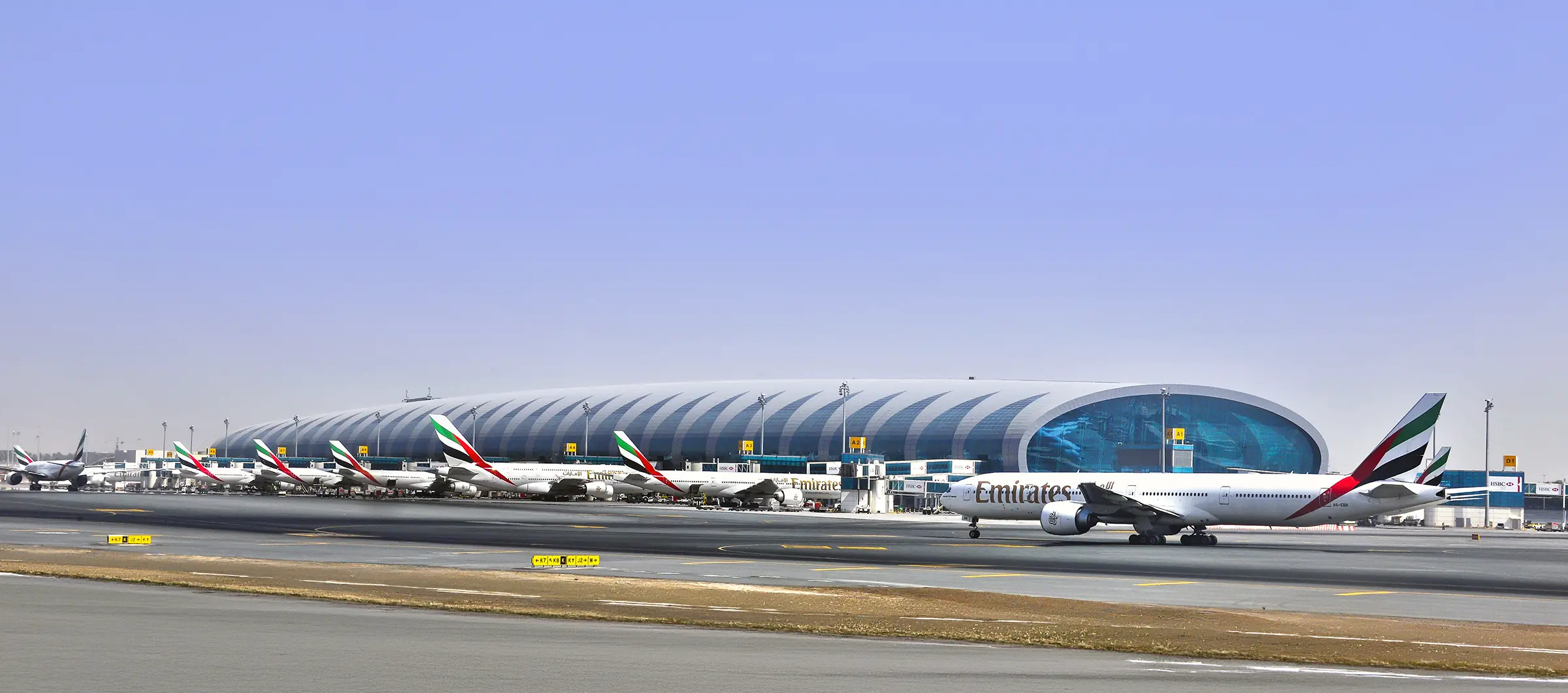
If there is one element that is inherent to the existence of airports it is the runways. They are its raison d'être. The size and number of runways determine the type and number of aircraft that can use that aerodrome and, consequently, they are the reason for its existence. a key factor in determining airport capacity.
Many technical factors are involved in the design of an airport runway, which determine its ideal characteristics.
Whether a runway is larger or smaller is not a trivial matter. It affects the types of aircraft that can use it, the safety margins in adverse conditions, construction costs, maintenance, ancillary services, etc. The consequence is that it has to be designed on a case-by-case basis. But how do you determine the appropriate length?
The main technical factors involved in deciding the required size of a runway are several, including aircraft type, destinations served, surface class, longitudinal slope, altitude and weather.
The type-aircraft is the aircraft that will operate at the airport most often and defines the ideal runway length. Each aircraft has specifications that indicate the metres necessary to carry out each of its operations, taking into account different situations. However, it is prudent to consider that there will be other aircraft with greater requirements and susceptible to use that aerodrome, so it is logical to take this value into account when sizing the runway.
This aspect is very interesting since not only do you have to keep in mind what the required length is for a particular aircraft model, but you also have to take the value for less than ideal conditions (especially adverse weather conditions), as we will see below.
Several examples could be given depending on the nominal characteristics of some aircraft at full load. At one extreme, the Boeing 747-8 needs about 3,090 metres for take-off, while the Airbus A380-900 needs 3,100 metres. However, the most common aircraft found at most airports require much less runway. This is the case of the Boeing 737-800, which requires 2,450 metres for take-off, or the Airbus A319, which takes off in 1,950 metres, always in limit conditions.
A second factor to consider is the longitudinal slope of the runway. Las condiciones ideales de diseño prevén que la pendiente sea del 0,0 %, pero en ciertas ocasiones las geomorphological constraints make it necessary to build runways where the slope is relevant. In these cases, and bearing in mind the prevailing winds, whether the slope is positive or negative will affect whether the aircraft requires more or less runway to operate on it.
Son especialmente conocidos los casos del aeropuerto de Courchevel, en los Alpes franceses, con una pendiente de hasta un 18,5 % o la del aeropuerto de Lukla (Nepal) en pleno Himalaya, con una pendiente del 12 %.
The nature of the track is also a conditioning factor. There are asphalt, concrete, grass, dirt or even packed snow tracks. Each material has specific characteristics that condition the taxiing of aircraft.especially its coefficient of friction. This directly affects take-offs and landings and consequently determines the length required for the aircraft to operate.
There are curious cases such as Barra Airport (Outer Hebrides Islands, northwest Scotland). Its runway is located in the middle of a beach and operations are carried out on the sand, which can be more or less flooded depending on the tides.
Another important factor in defining the length of a runway is the altitude at which it is located. This value is in inverse relationship to air density. As the height above sea level increases, less air mass is circulated through the aircraft engine, which means less thrust. The lower air density also affects the ability of the wing to produce lift, so a higher speed will be required, as well as a higher angle of attack. The consequence is that, for a given aircraft model, the length required to operate on a runway is greater in altitude than if the airport were at sea level.
The highest commercial airport in the world is Daocheng Yading Airport in Sichuan Province, China, located at 4,411 metres above sea level. To give you a clear idea of what this means, bear in mind that the air pressure at sea level is 1 atmosphere (760 mmHg), while at this airport it is only 0.577 atmospheres (439 mmHg), almost half that.
The next highest airports in the world are Changdu Bamda (4,334 m), Kangding (4,280 m) and Ngari Gunsa (4,274 m), all in China. The capital of the country with the highest airport is La Paz (Bolivia), where its El Alto International Airport is located at 4,061 metres.
The climatology of a place is the set of atmospheric conditions specific to that areaand their variations over time. Each airport is subject to a regional climatic characterisation that allows us to predict the standard conditions that we may encounter at any time of the year. Among the most important parameters in this case for defining the length of runways are usually the temperature.
The heat is a direct cause of the suspension of hundreds of flights every year. The higher the temperature, the lower the air density (oxygen molecules per unit volume decrease) and consequently less combustion and power is produced. As in the case of altitude, it is necessary to plan for a longer take-off length. Although it is logical to take the annual average temperature values of the area, the periodicity or eventuality of extreme weather events must be taken into account.
La zona de Oriente Medio es la que marca la diferencia en lo que a altas temperaturas se refiere. Las más altas registradas en aeropuertos corresponden a los de Ahvaz (Irán), con 54 ºC en junio de 2017; y el aeropuerto de Basora (Iraq) con 53,9 ºC en julio de 2016.
En el lado opuesto está el aeropuerto más frío del mundo, el de Oymyakon (Rusia), donde se alcanzó hasta -67,7 ºC en una zona que solamente tres o cuatro meses al año supera los cero grados de media.
The state of the track is not directly related to its design, but affects the number of metres required for an aircraft to land or take off. Poor maintenance or the presence of dust, sand, water or other elements can significantly affect operations.
A la hora de dimensionar las necesidades de espacio para el aterrizaje de una aeronave se suele compensar la posibilidad de malas condiciones de adherencia en pista con un incremento en torno al 15 % sobre las condiciones ideales.
The design and dimensioning of runways is a complex task involving many technical parameters. But not only. It cannot be an isolated technical assessment, but must go hand in hand with an adequate estimation of the economic, social, environmental or opportunity needs associated with the aerodrome.