The digitisation is now the key driver of the changes that companies have been making over the last few years and it undoubtedly has the potential to provide new opportunities for value creation. This process, which has been going on all around us for some time now, has been seen exponentially in the last few years. accelerated After the outbreak of the global crisis triggered by COVID-19, what was already a reality for most companies has become a necessity for all of them.
The intelligent and personalised integration of the different technologies present in companies is the next challenge in the digital transformation.
This digital transformation can, of course, provide companies with outstanding capabilities but it also creates enormous expectations among customers. Therefore, in line with these rising expectations, all industries are investing in digital technologies to differentiate their portfolio of products and services, but it is obvious that not all of them will succeed. There are still a lot of challenges to be solved, especially those related to the huge increase in communication flows that have created new risks for the privacy of exchanged data.
The rapid evolution towards a fully connected world has enabled millions of customers to real-time access to global platforms and markets and companies across all industries are trying to manage the challenges related to the increased expectations of their customers: internal cultural transformation, new logistical challenges or the need to train their staff in new digital skills.
The availability of technologies at ever lower cost technologies such as cloud computing, virtual reality and 3D printing are radically changing the way people shop, travel and work. Of course, these technologies are also being applied to businesses themselves as part of a concept that readers are surely already familiar with called Industry 4.0
In the coming months, therefore, the industry is faced with a dizzying scenario of rapid economic and social change while going through this period of uncertainty, it is imperative to maintain a competitive position in order to survive and to continue to provide products and services that the market appreciates as being of value. added value.
In this environment of digital transformation, all companies must understand flexibility as a fundamental elementThe European Commission has identified the need for a new, more efficient and effective information management system as a key driver of transformation, and improved access to information from any physical location or time zone will be mandatory. improve the efficiency of internal processes leading to improved productivity by reducing operating costs.. For this reason, automating the repetitive and lower-value part of internal production processes can allow companies to relocate their staff to more strategic tasks.
It is likely that the majority of the workforce will never again work in a corporate office on a continuous basis and the company should strive to provide them with reliable communications, virtual meeting applications, different hardware options, corporate applications with usable and user-friendly interfaces and cyber-security tools to ensure a satisfactory user experience that will result in a more productive employee.
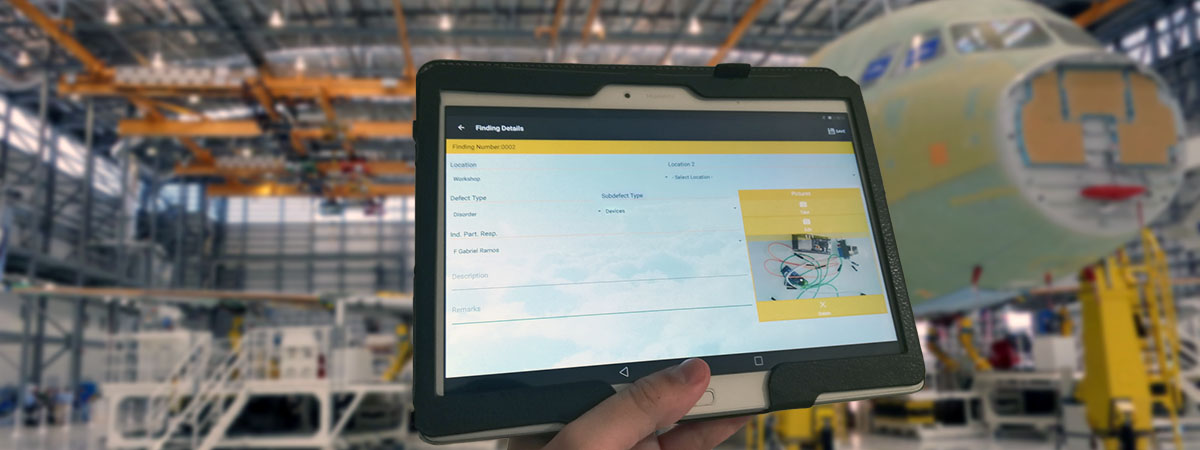
One of the most direct and obvious cases of implementation is the reduction (or even disappearance) of the use of paper in internal processesIn addition to the obvious environmental and economic motivations, the evolution of technology, with the development of ever lighter and more powerful electronic devices, makes it possible to exchange data in real time, simplify documentation configuration control, facilitate the homogenisation of databases and the standardisation of information formats for relocated employees.
Almost all experts agree that the same technological enablers as drivers for the deployment of Industry 4.0 in our companies. These are the Digital Twin, Augmented and Virtual Reality, the (Industrial) Internet of Things or IIoT, Big Data, Artificial Intelligence, Collaborative Robotics, Autonomous Vehicles, Additive Manufacturing and of course Cybersecurity, which is becoming increasingly important, wraps all this technological deployment.
The need to increase resources dedicated to cybersecurity in the industry is becoming more and more relevant as we are not only talking about phishing but to reduce the potential impact of damage to people, machinery or end products, e.g. when a corporate IIoT network is attacked and its vulnerabilities exposed, the impact can not only have a huge influence on a company's financial results but also generate unnecessary reputational risks.
Another very relevant aspect to highlight is that the application of technology does not by itself create a mechanism capable of automatically improving the efficiency of a sufficiently complex industrial process, the contribution of experienced persons is strictly necessary. to particularise the deployment of the technological base in each industrial use case. However, it is mandatory for human beings to evolve our skills to adapt our role within the new production chain by contributing value in order to justifiably discard the idea of human obsolescence in the industry of the future.
Only when the human factor and the business instinct are perfectly aligned with the deployment of technology in industry will there be measurable improvement in the productive environment and the addition of value to society.
Against this background further progress in the digital transformation of companies is already needed and, having moved beyond the starting point, decide what the next step in technological evolution should be. As possible elements of that step forward we can think that the following are some of the premises to be taken into account:
- Progress will be made on the relocation of workplaces.
- The following will be necessary new interactive models with corporate systems for smart working.
- It is necessary to aim for the immediacy of data collection relevant to our production process.
- The multimedia resources should support the performance of complex tasks.
- Offshoring cannot be understood without the size and weight reduction hardware.
- The aim should be to merging as many technologies as possible (virtual reality, 3D printing, etc.) running in real time on the same device.
- But it will be necessary to find a balance between having the largest number of technologies available and the volume occupied by the devices, so it will be necessary to work on the hardware modularity to optimise resources.
- And, of course, all devices must self-maintenance, self-diagnosis and self-replacement in case of malfunction.
This reasoning suggests that future trends in digitisation may lead to the development of a intelligent integration of all technological enablers mentioned above (and perhaps some others), we will have to stop considering them as separate entities and start considering environments in which several technologies coexist simultaneously in the same workspace.
As a paradigm of this concept emerges the definition of the Industrial Digital Desk (ID2) as an ideal technological environment where the worker has the possibility of using the technology he needs in a flexible and dynamic way at any given moment to carry out each of his tasks and we will have to imagine our future corporate devices as modular and portable equipment which we can use, for example, to project in 3D a possible modification to the lay-out We can also use the data from a robotic cell as we move around the factory, to launch a remote support request to our colleagues in the Hong Kong office; to measure our vital signs during the working day or to request an autonomous vehicle to bring a part urgently to our location within the manufacturing plant.